Oxalis Achieves CMMC Level 2 Certification

Strengthening Our Commitment to Defense and Regulated Industries

Oxalis is proud to announce we have achieved Cybersecurity Maturity Model Certification (CMMC) Level 2, a critical milestone that validates our ability to securely handle Controlled Unclassified Information (CUI) and positions us to deepen our support for the defense industrial base, MRO providers, and maritime operators.

This certification reinforces what our clients already know: Oxalis is built for highly regulated environments. It demonstrates our commitment to delivering technology solutions that meet the highest security standards while enabling the digital transformation our defense industrial base partners need to remain competitive and mission-ready.


“For nearly a decade, Oxalis has been committed to serving organizations where security and compliance aren’t optional—they’re mission-critical. Achieving CMMC Level 2 certification validates our security-first culture and opens new opportunities to support the defense industrial base. This isn’t just about expanding our market; it’s about proving we can be trusted with the sensitive information that keeps our nation secure.”

Jonathan Malanche, CEO

Oxalis


What is CMMC and Why Does it Matter

The Cybersecurity Maturity Model Certification (CMMC) is the DoD’s unified standard for implementing cybersecurity across the defense industrial base (DIB). Created to protect Federal Contract Information (FCI) and Controlled Unclassified Information (CUI), CMMC ensures that all contractors and subcontractors handling DoD information maintain robust cybersecurity practices.

CMMC Level 2 represents an advanced security posture required for organizations that create, process, store, or transmit CUI. It encompasses 110 security controls aligned with NIST SP 800-171 Rev. 2, covering critical areas including: 

  • Access control and authentication 
  • Incident response and recovery 
  • System and communications protection 
  • Risk assessment and continuous monitoring 
  • Configuration management and media protection 

Achieving CMMC Level 2 certification requires a rigorous third-party assessment by a Certified Third-Party Assessment Organization (C3PAO). 

Understanding Controlled Unclassified Information (CUI)

Controlled Unclassified Information (CUI) is unclassified information that the U.S. government creates, possesses, or that an entity creates or possesses on behalf of the government, which requires safeguarding and dissemination controls. 

CUI is not classified information, but it still demands protection. It includes technical drawings, engineering specifications, operational reports, procurement data, and other sensitive materials shared between the DoD and its contractors. The DoD CUI Program standardizes how this information is marked, handled, and protected across the defense ecosystem. 

Achieving CMMC Level 2 compliance allows Oxalis to work directly with sensitive defense information, support system modernization efforts, and provide the deep technical integration our clients need, without compromising security or compliance. 

What This Means for Oxalis Clients

CMMC Level 2 certification expands Oxalis’ ability to serve the DIB in several critical ways:

  • Eligibility for DoD Contracts. Starting in late 2025, most DoD contracts involving CUI require full Level 2 certification from a third-party assessment. Oxalis’ certification ensures we can continue bidding on and supporting contracts that involve sensitive defense information. 
  • Deeper Integration with Mission-Critical Systems. Our certification enables us to work within or adjacent to DoD environments, supporting everything from ERP implementations and cloud migrations to IT modernization and digital transformation initiatives. 
  • Supply Chain Security. By achieving CMMC Level 2, Oxalis strengthens the overall security posture of the defense supply chain. Our clients can trust that their sensitive information is protected when working with us, reducing risk across their own compliance posture. 

Reinforcing our Goal in Providing Solutions Built for Highly-Regulated Environments

CMMC Level 2 certification is a natural extension of Oxalis’ core mission: helping government, defense, healthcare, and other highly regulated organizations modernize their operations without compromising security, speed, or compliance. 

From our partnerships with Atlassian (including FedRAMP and Atlassian Government Cloud) and IFS, to our proprietary solutions like YardOS, we design every engagement and product with the unique demands of regulated sectors in mind. Our team understands that in defense and government work, there’s no room for error; every system must be secure, auditable, and future-ready. 


“The defense industrial base faces evolving cyber threats every day. CMMC Level 2 isn’t a one-time achievement – it’s a commitment to continuous security improvement. Our team has embedded these controls into our DNA, from product development to client engagements. This certification gives our DIB partners confidence that when they work with Oxalis, they’re working with a team that takes security as seriously as they do.” 

Micah J. Waldstein, VP 

Oxalis


At Oxalis, we’ve spent years building deep expertise in highly regulated industries. We’ve supported various defense agencies, partnered with IFS to modernize naval MRO operations, and helped organizations across the defense industrial base navigate complex digital transformations. In every one of those engagements, trust is the foundation. 

CMMC Level 2 certification formalizes that trust at the system level. 

For our existing clients, it means they can bring Oxalis deeper into sensitive environments, knowing we have the certified security posture to operate there responsibly. For prospective clients evaluating technology partners for DoD work, it removes a critical barrier — Oxalis is now verified as a compliant organization capable of handling CUI within the defense supply chain.

Atlassian Government Cloud Is Now GA—Here’s What It Means for Regulated Agencies and Their Industry Partners

Updated on July 31, 2026.

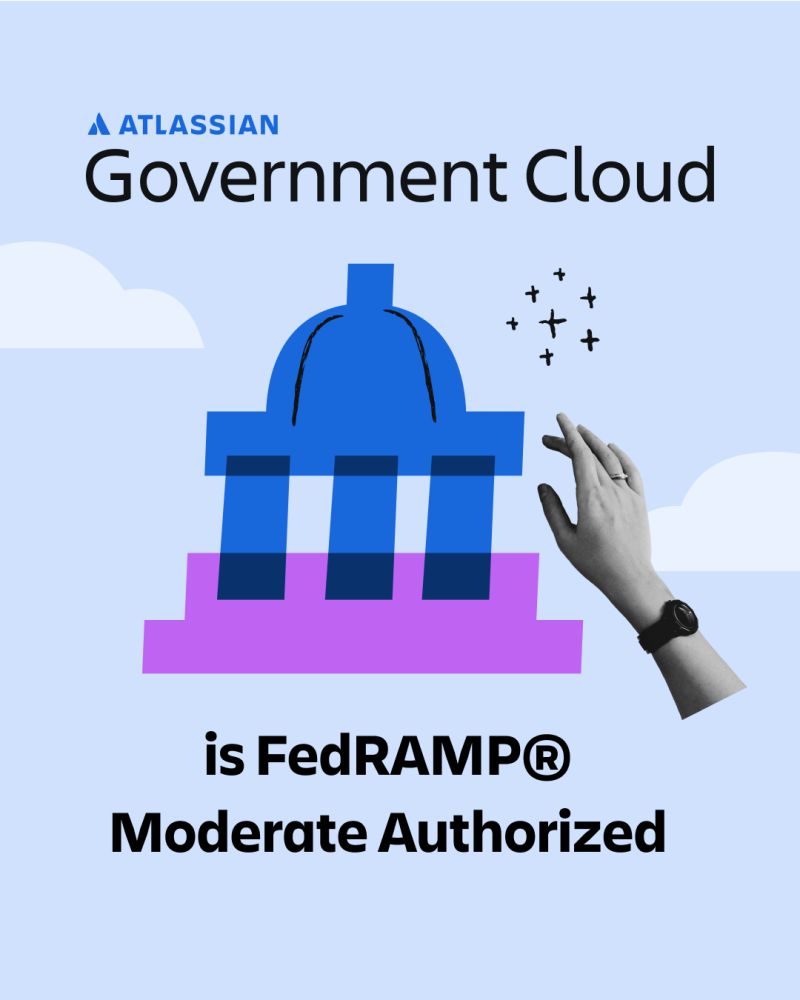
Atlassian Government Cloud (AGC) reached general availability under a FedRAMP Moderate authorization. Government agencies and regulated organizations can now run Jira, Jira Service Management, and Confluence in a U.S.-resident cloud environment while meeting that authorization’s requirements.

For Oxalis customers, it opens a path to consolidate on Atlassian Cloud without giving up the compliance posture the work requires.

What changes for agencies on AGC

With it, government teams get five capabilities they didn’t have on Data Center.

  • Continuous updates, with no separate upgrade cycle to plan around. Improvements, security enhancements, and workflow updates arrive as they’re ready, without downtime or maintenance windows.
  • Atlassian Analytics. Visualize performance across Jira, Confluence, and Jira Service Management. Cross-team insights that used to require custom integrations or manual reporting are now built in.
  • Modern service management. Advanced approvals, Assets (CMDB), intelligent routing, forms, and reporting give teams faster, more transparent service delivery.
  • Platform-wide governance. Standardized controls and simplified identity management let agencies enforce consistency and security without brittle customizations or aging plugins.
  • A government-compliant architecture. U.S.-only data residency, FedRAMP Moderate authorization, and elevated security baselines, with Guard Standard included.

Not all workloads and features are covered yet

GA is real, and it isn’t universal. FedRAMP Moderate authorizes AGC for Controlled Unclassified Information, which covers a wide range of civilian agency programs and defense-adjacent contractor work. It does not cover workloads that require FedRAMP High or DoD Impact Level 5. Both remain on Atlassian’s roadmap. Atlassian has said publicly it is targeting FedRAMP High before Data Center reaches end of life; IL5 has no public date.

A few capabilities also haven’t crossed into the government environment yet, including Atlassian Intelligence and Rovo, the mobile apps, and some external-facing Jira Service Management features like customer portals and virtual agents.

So the first question isn’t whether to move. It’s which group you’re in. If your data requires only Moderate, you can move now. If it requires High or IL5, you can still get everything else ready, map your environment, separate what can migrate now from what has to wait, and stage the rest so you’re positioned the day authorization lands. We go deeper on this in what FedRAMP Moderate actually covers for government teams.

Government Cloud roadmap continues to build capabilities

AGC launched with Jira, Confluence, Jira Service Management, and Atlassian Analytics, and the platform keeps advancing on a defined roadmap. Sandboxes were part of the 2025 rollout. Through 2026, Atlassian is adding backup and restore, Guard Premium data classification, expanded integrations and app options, and new incident, problem, and change management capabilities, steadily narrowing the distance to commercial parity.

Government Cloud isn’t static. It’s improving on a published cadence, which means an agency that moves now keeps gaining ground rather than locking into a fixed feature set.

The core value of AGC is capability, not urgency

The agencies getting the most out of this move aren’t migrating because they have to; they’re modernizing because Government Cloud lets them work faster, govern more clearly, and operate on a more defensible security posture.

That said, the deadline is real. Atlassian Data Center reaches end of life on March 28, 2029. New-customer sales have already closed, and license expansions for existing customers end in 2028. For teams still self-managing, “later” now has a date attached to it. Agencies can pursue the modernization case on its own terms, and still plan around the 2029 deadline.

Oxalis supports AGC migrations

Choosing Atlassian Government Cloud is one decision. Making it deliver is another. Oxalis is an Atlassian Platinum Solutions Partner specialized in Cloud Migrations, a certified Government Cloud partner, and Atlassian’s 2026 Partner of the Year for Services Delivery in the Americas. We’ve moved some of the most complex, highly regulated Atlassian environments to cloud, and the results hold up: TriMet cut resolution time by 55%, and California DHCS raised satisfaction scores across a statewide behavioral health program.

For agencies moving to AGC, that work looks like this.

  • Strategic modernization planning. We assess your environment, find the high-value opportunities, and build a blueprint that streamlines workflows rather than lifting old complexity into a new home.
  • Application and integration rationalization. Years of plugins and customizations get sorted into what’s essential, what’s redundant, and what to rebuild cleanly in cloud.
  • Identity and compliance alignment. From SSO and SCIM provisioning to FedRAMP-aligned controls, your environment is configured correctly from day one.
  • Phased, low-risk migration. A structured approach that keeps teams productive and protects mission-critical continuity.
  • Post-migration optimization. Once you’re live, we help your teams actually adopt the new capabilities and get full value from the investment.

For defense-adjacent contractors, Oxalis also holds CMMC Level 2 certification, an independent third-party validation of how we handle Controlled Unclassified Information.

Most agencies don’t need more cloud marketing. They need someone to tell them specifically what they can move, what they can’t move yet, and what the path looks like for their environment.

Start with an Atlassian Government Cloud Migration Readiness Assessment.
Oxalis will review your environment, your compliance requirement, and the capabilities worth prioritizing, so your next move is grounded in your reality, not a press release.

Request Your Migration Readiness Assessment


Maritime MRO Modernization in Focus: Oxalis and IFS Partner to Transform Aerospace and Defense

That’s why we’re proud to announce a strategic partnership with IFS, a global leader in enterprise resource planning (ERP) software, to deliver modern, integrated solutions for maritime MRO modernization, aerospace operations, and defense readiness.

Together, Oxalis and IFS are helping organizations navigate industry transformation with confidence—streamlining operations, improving efficiency, and building the digital foundation for long-term success.

Partnering for Impact: Maritime MRO Modernization and Defense ERP, Reimagined

Our new collaboration brings to market ERP Maritime solutions designed specifically for shipbuilders, MRO providers, and defense manufacturers. With IFS’s proven platform and Oxalis’s deep experience in system integration, cloud strategy, and change enablement, we’re helping organizations tackle today’s biggest challenges head-on.

The U.S. Navy’s selection of IFS as its future MRO platform reflects the direction the industry is moving. As the defense ecosystem prepares for this shift, Oxalis is making sure shipyards, aerospace manufacturers, and industrial partners are equipped to participate—and thrive.

Why This Moment Matters

Across the Maritime, Aerospace, and Defense sectors, organizations face increasing pressure to modernize aging infrastructure, overcome legacy system limitations, and strengthen supply chain resilience.

Whether you’re:

  • shipyard supporting U.S. Navy or allied fleet maintenance
  • defense manufacturer producing critical components
  • An MRO provider ensuring asset uptime and readiness

…the future demands flexible, secure, and insight-driven ERP solutions. Oxalis and IFS are working together to deliver exactly that.

What This Partnership Unlocks

By combining IFS’s industry-leading ERP, EAM, and analytics solutions with Oxalis’s technical expertise and implementation know-how, we’re helping organizations:

  • Streamline MRO operations and reduce downtime
  • Enhance supply chain agility with real-time data and predictive tools
  • Modernize shipbuilding and defense logistics from the ground up
  • Strengthen workforce productivity through smarter digital workflows
  • Ensure compliance and security, meeting the demands of DoD and industry standards

This is about building the systems that support national security, industrial competitiveness, and global defense readiness.

Preparing for What’s Next

At Oxalis, we take pride in helping clients stay ahead of change—not just respond to it. We’re skating to where the puck is going, aligning our capabilities with the strategic direction of the defense industrial base.

This partnership reflects that forward momentum. It’s about positioning businesses to lead, not follow, in a rapidly evolving landscape where operational excellence, digital fluency, and mission alignment are more critical than ever.

Let’s Shape the Future Together

Whether you’re a shipbuilder, aerospace supplier, or MRO provider, the path to modernization is clear—and now is the time to act.

Oxalis and IFS are ready to help you build what’s next.

Reach out today to learn how we can support your digital transformation journey.


Why Atlassian Government Cloud is the Future for Public Sector Teams

Government agencies are under increasing pressure to modernize their IT infrastructure while maintaining stringent security and compliance standards. With the rapid acceleration of cloud adoption across the public sector, agencies need solutions that are secure, scalable, and purpose-built for government operations. Enter Atlassian Government Cloud—a FedRAMP Moderate-authorized platform designed to help agencies move work forward faster, collaborate efficiently, and maintain the highest levels of security and compliance.

The Shift to Cloud: Why Now?

The U.S. government is prioritizing cloud-first and cloud-smart strategies to enhance efficiency and agility. As agencies transition away from legacy on-premises systems, they require solutions that:

  • Ensure security and compliance while handling Controlled Unclassified Information (CUI)
  • Reduce IT overhead and eliminate infrastructure maintenance burdens
  • Foster cross-agency collaboration with modern, cloud-based tools
  • Scale effortlessly to accommodate growing mission demands

With Atlassian Government Cloud, agencies no longer have to choose between security and innovation—they can have both.

What is Atlassian Government Cloud?

Atlassian Government Cloud is a dedicated cloud environment designed for public sector organizations. Built on Amazon Web Services (AWS) us-east-1, with redundancy in us-west-2, it ensures high availability, security, and compliance with federal standards. Unlike Atlassian’s commercial cloud, the Government Cloud environment is entirely separate, with:

  • Strict data controls to prevent unauthorized data access or transfer
  • A separate login environment for government users
  • Network firewalls to restrict inbound and outbound data flow

This purpose-built architecture allows agencies to modernize their workflows, improve collaboration, and confidently migrate to the cloud while staying FedRAMP-compliant.

Key Benefits for Government Agencies

  • FedRAMP Moderate Authorization – Ensures compliance with rigorous federal security requirements
  • Fully Managed Infrastructure – Reduces IT complexity with automatic updates and security patches
  • Enhanced Collaboration – Enables real-time teamwork across agencies and remote teams
  • Scalability & Cost Savings – Eliminates the need for expensive on-premises infrastructure
  • Seamless Migration Path – Designed for agencies currently using Atlassian Data Center or Cloud

Why Migrate Now?

If your agency is still running Atlassian Data Center or an on-premises ITSM solution, now is the time to plan for migration. With FedRAMP Moderate Authorization in place, Atlassian Government Cloud offers a secure, future-proof platform that allows agencies to streamline workflows, optimize IT service management, and enhance collaboration without compromising compliance.

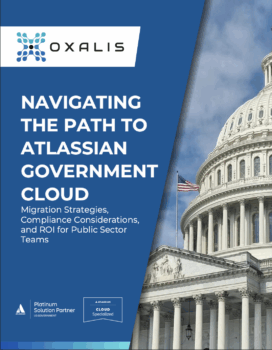
Download our Whitepaper

Navigating the Path to Atlassian Government Cloud

Take the Next Step

Don’t wait until your legacy infrastructure slows you down. Contact Us.

Recommended Blog Post

Unlock a Service-Centric Mindset: The Key to ESM Success

In today’s competitive landscape, exceptional service delivery isn’t just a nice-to-have—it’s a business imperative. But what if we told you that the key to transforming service delivery across your entire organization lies in the principles of IT Service Management (ITSM)?

ESM breaks down silos, streamlines workflows, and empowers employees to deliver exceptional service experiences across the entire enterprise. Let’s explore how ESM can revolutionize your organization.

The ESM Advantage: Key Benefits

ESM isn’t just about applying IT tools to other departments; it’s about adopting a service-centric mindset across the organization. Here’s how ESM can transform your service delivery:

  1. Enhanced Efficiency and Productivity: ESM streamlines workflows, automates tasks, and eliminates redundant processes, freeing up employees to focus on higher-value activities. Imagine onboarding new hires with automated workflows or resolving employee inquiries through a self-service portal.
  2. Improved Employee Satisfaction: ESM empowers employees with easy access to information and services, reducing frustration and boosting morale. Think of a centralized knowledge base for common HR questions or a streamlined process for submitting expense reports.
  3. Increased Customer Satisfaction: By optimizing service delivery across all departments, ESM contributes to a seamless and positive customer experience. Whether it’s resolving customer inquiries faster or providing proactive support, ESM helps you build stronger customer relationships.
  4. Reduced Costs: ESM eliminates inefficiencies, reduces manual errors, and optimizes resource utilization, leading to significant cost savings. Imagine the cost savings from automating invoice processing or streamlining facilities requests.
  5. Greater Agility and Responsiveness: ESM enables organizations to adapt quickly to changing business needs and customer demands. By providing a flexible and scalable service delivery model, ESM helps you stay ahead of the curve.

ESM in Action: Real-World Examples

Let’s see how ESM can transform service delivery in different departments:

  • HR: Streamline onboarding processes, manage employee requests, and provide self-service access to HR information.
  • Finance: Manage policy reviews, budget allocations, expense reports, and provide efficient financial support services. Manage expense reports, and provide efficient financial support services.
  • Facilities: Handle maintenance requests, manage work orders, and optimize space utilization.
  • Legal: Manage contracts, track legal requests, and provide efficient legal support services.

Oxalis: Your Partner in ESM Transformation

Embarking on an ESM journey can be exciting, but it requires careful planning and execution. Oxalis Solutions, an Atlassian Platinum Solution Partner, is your experienced guide in navigating the complexities of ESM implementation.

Our team of certified experts takes a creative, consultative approach, understanding that each organization’s needs are unique. We go beyond simply implementing tools; we work closely with you to understand your specific challenges and goals, tailoring our solutions to optimize service delivery across your enterprise.

With Oxalis, you can trust that your ESM transformation will be handled with the utmost care and expertise, ensuring a smooth transition and maximized ROI. We’re committed to your success, providing ongoing support and partnership every step of the way.

Ready to Embrace the Power of ESM?

READ MORE:

Revolutionizing Shipyard Asset Management: How PPESM is Charting a New Course

Naval shipyards are bustling hubs of activity, where complex projects and tight deadlines demand efficient operations. At the heart of these operations lies the management of a vast array of plant, property, and equipment (PP&E) – the backbone that keeps ships seaworthy and missions on track. However, traditional asset management methods, often reliant on manual processes and disconnected systems, have struggled to keep up with the demands of modern shipyards.

That’s where Plant, Property & Equipment Service Management (PPESM) comes in. This innovative approach, rooted in Enterprise Service Management (ESM) principles, is transforming how shipyards manage their assets, leading to increased efficiency, reduced costs, and improved decision-making.

The PPESM Advantage

PPESM offers a holistic solution for the entire asset lifecycle, from acquisition to decommissioning. It leverages technology to centralize asset data, automate workflows, and provide real-time visibility into maintenance and repair processes. This translates to:

  • Streamlined Operations: Say goodbye to paperwork and manual tracking. PPESM automates tasks like maintenance scheduling, work order generation, and compliance tracking, freeing up valuable time and resources.
  • Enhanced Decision-Making: With a centralized view of asset data and performance, shipyard managers can make informed decisions about resource allocation, maintenance strategies, and asset utilization.
  • Improved Compliance: PPESM ensures that critical certifications and regulatory requirements are met, reducing the risk of non-compliance and associated penalties.
  • Cost Savings: By optimizing maintenance schedules, minimizing downtime, and extending asset lifespans, PPESM helps shipyards save money and allocate resources more effectively.

PPESM in Action: A U.S. Navy Shipyard Case Study

The real-world impact of PPESM is evident in a recent case study at a U.S. Navy shipyard. The shipyard faced challenges with manual processes, data silos, and a lack of integration between systems. These issues hindered efficiency, led to errors, and made it difficult to track compliance.

By implementing PPESM in phases, the shipyard was able to digitize maintenance records, streamline equipment requests and scheduling, and empower personnel with mobile access for real-time reporting. The results were impressive:

  • Elimination of compliance and certification issues
  • Increased reporting of maintenance issues, leading to better equipment care
  • Reduction in paperwork errors and lost data
  • Improved efficiency and accuracy through integration with other shipyard systems

The Future of Asset Management in the Maritime Industry

The success of PPESM in the naval shipyard demonstrates its potential to transform asset management practices across the maritime industry. By addressing challenges like aging infrastructure, complex supply chains, and workforce shortages, PPESM offers a pathway to greater efficiency, cost savings, and improved decision-making.

Furthermore, PPESM is not just a software solution – it’s a catalyst for digital transformation in the maritime sector. By embracing PPESM and leveraging emerging technologies like artificial intelligence and predictive analytics, shipyards can unlock new levels of operational excellence.

Oxalis: Your Partner in PPESM Implementation

At Oxalis, we understand the unique challenges faced by shipyards and other organizations with complex asset management needs. We’ve helped numerous clients implement PPESM solutions using Atlassian’s Jira Service Management, a powerful and flexible platform that can be tailored to meet the specific requirements of any organization.

Plant, Property & Equipment Service Management: Jira Service Management
Jira backlog
IT Asset Management template

Our team of experts can guide you through the entire PPESM implementation process, from assessing your current state to configuring the system, training your staff, and providing ongoing support. We’re committed to helping you achieve your asset management goals and unlock the full potential of your PP&E.

From Chaos to Control: The Transformative Power of PPESM

PPESM represents a new era in asset management for the maritime industry. It empowers shipyards to move beyond outdated manual processes and embrace a more efficient, data-driven approach. By adopting PPESM, shipyards can optimize their operations, reduce costs, improve compliance, and ultimately enhance their ability to support critical missions. If you’re ready to transform your shipyard’s asset management, contact Oxalis today to learn more about our PPESM solutions.

Shipyard SOS: Jira Service Management to the Rescue for Subcontractor & Vendor Compliance

Managing subcontractor and vendor compliance in the maritime industry can feel like a constant battle against a rising tide of regulations and paperwork. From tracking certificates of insurance (COIs) to ensuring adherence to stringent cybersecurity standards, the complexities can be overwhelming.

However, what if there was a solution that could transform this challenge into a smooth-sailing operation? Imagine a centralized platform that not only streamlines vendor information but also automates compliance tasks and provides valuable insights into vendor performance. This is precisely what Jira Service Management (JSM) and Jira Assets offer to the maritime industry.

Why Shipyards Need a Better Way to Manage Vendors

Let’s face it: vendor management in ship repair is a complex beast. You need to know who’s approved, what they can do, and how they’ve performed in the past. Different departments like Supply Chain, Finance, and Production all need this information, but it’s often scattered across emails and spreadsheets. COIs expire, the wrong vendors get chosen, and everyone loses time trying to track down the right details.

Sound familiar? The good news is, it doesn’t have to be this way.

JSM & Assets: Your All-in-One Vendor Management Solution

Jira Service Management and Assets, by Atlassian, are tools that are transforming how shipyards handle vendor compliance. Here’s what they bring to the table:

  • Centralized Vendor Database: Say goodbye to endless email threads and scattered spreadsheets. All your vendor information, from contact details to certifications, lives in one place where everyone who needs it can access it.
  • Automated Workflows: Need to track expiring COIs? Want to automatically update vendor status based on performance? JSM automates these tasks, freeing up your team for more important work.
  • Vendor Portal: No more chasing down vendors for information. With the Assets vendor portal, they can easily submit and update their details themselves.
  • Integration with Oxalis: The real magic happens when you integrate JSM with the Oxalis Ship Repair System. Estimators can see approved vendor information right in OSRS, and CARs/NCRs automatically link to vendor records, giving you a clear view of performance.

Real-World Results: A Shipyard’s Transformation with JSM

A major shipyard, facing the typical challenges of scattered vendor information and manual compliance tracking, decided to take the plunge and implement Jira Service Management (JSM) along with Jira Assets. The results were nothing short of transformative.

By integrating JSM with their existing ship repair production tracking and estimation systems, they created a centralized hub for all vendor-related data. No more digging through emails or spreadsheets – everyone from Supply Chain to Finance had instant access to the latest vendor information.

Efficiency Unleashed:

  • Vendor Portal: The shipyard empowered vendors through a self-service portal built with Jira Assets. Vendors could easily update their own information, certifications, and insurance documents, saving the shipyard countless hours of administrative work.
  • Automated Notifications: Say goodbye to missed COI expirations! Automated notifications kept both the shipyard and vendors in the loop, ensuring compliance and preventing costly disruptions.
  • Performance Tracking: Integrating JSM with the ship repair system allowed the shipyard to automatically link CARs/NCRs to vendor records. This meant a clear, objective view of vendor performance, informing smarter decisions for future projects.

The Bottom Line:

  • Time Savings: The shipyard reported a significant reduction in administrative time spent on vendor management.
  • Improved Efficiency: With a centralized system, teams across the shipyard worked more efficiently, eliminating the need for constant back-and-forth communication.
  • Data-Driven Decisions: Real-time visibility into vendor compliance and performance enabled the shipyard to make informed choices, mitigating risks and ensuring project success.

This case study is a testament to the power of Jira Service Management and Assets in transforming vendor management for shipyards. If you’re tired of the vendor compliance struggle, it’s time to consider a solution that can set you on a course for smoother sailing.

Smooth Sailing Ahead

Ready to leave the compliance headaches behind? Jira Service Management and Assets could be the solution you’ve been waiting for. With streamlined workflows, automated processes, and a centralized vendor database, you’ll be navigating the complexities of compliance like a seasoned captain.

Want to learn more about how JSM and Assets can revolutionize your vendor management? Contact the Oxalis team today for a demo and consultation!

Navigating Complex Repairs: Vigor Industrial’s Technology Journey

The Challenge

Vigor Industrial, a leading shipyard in the Pacific Northwest, serves both the U.S. Navy and commercial clients. They sought to expand their operations but faced significant hurdles. The aging U.S. Navy fleet demanded increasingly complex and time-consuming repairs, often plagued by supply chain disruptions and unexpected work requirements. This strained Vigor’s outdated paper and email-based management systems, resulting in errors and a lack of essential data for resource planning. These inefficiencies limited their capacity to take on larger contracts. Additionally, the Navy’s budgetary constraints between maintenance and fleet expansion further restricted available repair work.

To overcome these challenges, Vigor partnered with Oxalis. Their goal was a system that would streamline communication with the U.S. Navy and optimize the management of complex ship repair projects.

Oxalis’ Approach

Oxalis invested in understanding Vigor’s unique challenges, processes, and goals. This deep dive ensured our solution aligned with both immediate needs and Vigor’s long-term growth trajectory. By fostering trust and demonstrating expertise, we positioned ourselves as a true partner, not just a technology vendor.

Our iterative development approach delivered rapid value while managing costs for Vigor. Instead of a monolithic solution, we prioritized and tackled pain points incrementally. This resulted in a unified, adaptable system that seamlessly managed CFRs, Checkpoints, WAFs, RCCs, Required Reports, and Specifications.

Recognizing Vigor’s potential for technology adoption, we provided comprehensive documentation and training. This empowered their team, regardless of prior tech experience, to fully leverage the new system’s capabilities.

The Outcome

Oxalis delivered a transformative, scalable technology solution that streamlined Vigor’s operations across all yards and customer segments. This resulted in:

  • Optimized Workflows: Reduced cycle times and administrative overhead, freeing up resources for growth.
  • Proven Success: The early delivery of the complex USS Wayne E. Meyer (DDG 108) project – involving thousands of CFRs, Checkpoints, RCCs, and WAFs – showcased the system’s power.
  • Strengthened Partnership: This success solidified Vigor’s relationship with the US Navy.

Key System Features:

  • Centralized Work Management: Approvals, notifications, and collaboration tools for greater efficiency.
  • Seamless Subcontractor Integration: Dedicated portal for simplified CFR management and communication.
  • Automated Compliance: NMD integration and adherence to NIST 800-171 and DFARS 7012 standards.

Additional Benefits:

  • Effortless Reporting: Automatic PDF generation and email notifications
  • Enhanced Mobility: Potential for bolt-on mobile applications for flexibility
  • Data-Driven Insights: Comprehensive dashboard, SLAs, and process data for informed decision-making and continuous improvement.

The outcome: Vigor gained a powerful competitive edge, enhancing their operations and setting the stage for future expansion.

Services Provided

  • Project Management
  • Product Development
  • Change Management 
  • Training 
  • Transition Management 

Get Started with Oxalis

Looking to achieve similar results to Vigor? Get started with the expert team at Oxalis today.

Atlassian Server End of Support is Here. Are You Ready?

On Thursday, February 15, 2024, Atlassian’s Server products will no longer be supported. This means Atlassian and Marketplace partners will no longer provide technical support for any issues, security updates, or bug fixes for Server.

If you are still on Atlassian Server licensing and have not yet developed a plan to move away from it, Oxalis can help guide your decision. At Oxalis, we see this as a great opportunity for our customers to make a calculated transition to dynamic solutions that work for their data management and collaboration strategy. Whether it’s moving to Atlassian Cloud or Data Center, there are numerous options for addressing compliance needs or regulations.

What End of Support Means

After 12:00 a.m. PST on February 15, 2024, Atlassian and Marketplace Partners will no longer provide technical support for any issues, security updates, or bug fixes for critical vulnerabilities. Regular security updates help protect your business from threats and vulnerabilities, so we recommend moving to Atlassian’s Cloud or Data Center products to ensure you continue to receive the critical support and services you need.

This transition applies to the following Atlassian Server products:

  • Jira Software Server
  • Jira Core Server
  • Jira Service Management Server
  • Confluence Server
  • Bitbucket Server
  • Crowd Server
  • Bamboo Server
  • Atlassian-built Server applications

Risks of Remaining on Server Products

Remaining on Server products after February 15, 2024 poses several risks, and you should act now to mitigate them.

  1. Increased vulnerability to security threats: Organizations that choose to remain on Server products will be at a higher risk of security threats, such as data breaches and cyberattacks. This is because security patches and updates will no longer be provided, leaving servers exposed to vulnerabilities.
  2. Lack of compliance with industry standards: Organizations that continue to run unsupported software may fall out of compliance with industry standards and regulations, such as PCI DSS and HIPAA. This can result in legal penalties, fines, and reputational damage.
  3. Limited scalability and flexibility: Server products have limited scalability and flexibility, making it difficult for businesses to adapt to changing business needs and growth. This can result in reduced productivity and competitiveness.
  4. Reduced reliability and performance: Server products will no longer receive updates and patches, and server performance and reliability may decline over time. This could lead to downtime and business disruption, detrimentally affecting productivity and revenue.
  5. Limited support and services: Organizations that remain on Server products after the end of support period will have support limited to Cloud migrations or DC upgrades, making it difficult to resolve server issues and get help when needed. This can result in longer downtime and increased business disruption.

How Did Atlassian Get Here?

Atlassian has been preparing for this major transition since 2020. Oxalis has been helping organizations define and execute their migration strategies in preparation for this milestone. 

Atlassian Server EOL
  1. October 16, 2020: Atlassian announces Server-licensed products to be phased out
  2. February 2, 2021: Atlassian stops the sale of new Server licenses
  3. February 15, 2022: Atlassian stops tier upgrades and downgrades for Server licenses
  4. February 15, 2023: Atlassian stops the sale of new Server apps
  5. February 15, 2024: Support for Server ends

The Methodology

As Atlassian cloud migration advisors, Oxalis’s unique expertise ensures Atlassian Cloud Migration success.

The Atlassian Cloud Migration Playbook, written for any company that needs to migrate from Atlassian Server or Data Center to the Cloud.


It covers the entire migration process from pre-planning to testing to executing the migration.

What Should you Do?

Organizations still using Server licenses have two options to continue using the Atlassian products in a supported manner:

  1. Migrate to Cloud: Operate more efficiently and focus on innovation with seamless collaboration, better integrations, and native automation.
  2. Upgrade to Data Center: Maintain self-managed environments with security controls, performance at scale, and flexible infrastructure choices.

This decision has several organization-specific deciding factors. Contact us to talk to an expert who can help you make the decision that’s best for you.

Benefits of Moving to Atlassian Cloud

Atlassian has invested heavily in their Cloud products, resulting in a best-in-class product offering that enables businesses to work faster, smarter, and stronger.

Atlassian Cloud products bring:

  1. Enhanced security and compliance: By migrating to Atlassian Cloud, organizations can benefit from enhanced security features such as encryption at rest and in transit, automatic updates and patches, and compliance with industry standards like SOC 2 and ISO 27001. This ensures that organizations’ data is always secure, reducing the risk of cyberthreats and data breaches.
  2. Increased scalability and flexibility: Atlassian Cloud offers unlimited scalability, allowing organizations to easily add or remove users, storage, and functionality as needed. With cloud-based solutions, customers can access their data from anywhere, anytime, and on any device, making it easier to collaborate and work remotely.
  3. Continuous innovation and feature updates: No more upgrades! By migrating to Atlassian cloud, organizations can take advantage of new features and updates, released on a regular basis, without having to worry about managing upgrades or downtime. This ensures that they always have access to the latest and greatest features, improving their overall experience and productivity.
  4. Improved reliability and performance: Atlassian Cloud is built on a robust and scalable infrastructure, ensuring high availability and reliability. This means organizations can count on their systems to be up and running when they need them, without worrying about hardware failures or maintenance issues.
  5. Fast and Reliable Support: With Atlassian Cloud, organizations have access to a wide range of support and services, including 24/7 technical support, online help center, and community forums. This ensures that organizations get the help they need, when they need it, reducing the risk of downtime and other issues that can affect their business.

Benefits of Moving to Atlassian Data Center

For many organizations, moving to Atlassian Cloud isn’t feasible due to their compliance or other business requirements. Oxalis has helped many organizations design a cost-optimized Data Center hosting architecture that meets their compliance and performance requirements.

Migrating to Data Center licensing allows for:

  1. Easy Transition: Atlassian has committed to making the transition from Server to Data Center licensing seamless.
  2. Higher Security: Organizations can deploy Data Center products in the hosting solution they prefer. This can include a cloud provider, such as AWS or Azure, as well as on-prem hosting solutions.
  3. Performance and High Availability: Data Center ships with the ability to be used in clustered environments for High Availability, but also in a simple (not clustered) configuration if you do not have this requirement.

Moving to Data Center can also serve as a temporary solution for organizations to ensure they continue to operate on a supported platform as they plan their Cloud migration journey.

Oxalis is Here to Help

As an Atlassian Platinum Solution Partner, Oxalis is here to help organizations plan and execute their migration strategy. We are a Cloud Specialized Partner with proven expertise and experience to lead and execute successful Server-to-Cloud migrations. We also specialize in high-compliance businesses, focusing on deploying compliant Data Center solutions, that meet your compliance, performance, and cost requirements.

We’re the ones you call to get it done the right way, the first time.