Public Sector Compliance Meets Operational Agility with IFS

In the public sector, compliance isn’t optional, but it doesn’t have to come at the cost of agility. Federal, state, and local agencies face tight budgets, critical infrastructure demands, and constant oversight, yet traditional systems built for accountability have often slowed progress instead of enabling it. IFS changes that equation by pairing strict governance with flexible, responsive execution, empowering teams to innovate while maintaining full compliance. At Oxalis, we help agencies adopt IFS to modernize operations, meet regulations with confidence, and adapt seamlessly to mission demands.

Home » IFS

The Compliance Challenge, Rewritten

Public sector organizations are governed by frameworks like: 

  • Federal Acquisition Regulation (FAR) 
  • Defense Federal Acquisition Regulation Supplement (DFARS) 
  • NIST and FedRAMP security standards 
  • GAAP, OMB A-123, FISMA, and more 

Add in internal policy layers, union agreements, and reporting obligations to multiple oversight bodies, and compliance quickly becomes a full-time job. Many agencies rely on legacy systems, spreadsheets, or point solutions to manage requirements—but these tools were never designed to evolve alongside changing regulations or support cross-functional agility. 

The result? Rigid processes, data silos, manual workarounds, and rising risk.

IFS: Designed for Control, Built for Change
IFS is built from the ground up to support organizations that are both highly regulated and operationally complex—like defense contractors, transportation departments, shipyards, utilities, and government agencies. 

It offers: 

  • Configurable workflows and approval chains aligned to your policies 
  • Audit trails on every action, asset, and transaction 
  • Role-based access and permissions, down to the field level 
  • Real-time reporting and dashboards that simplify inspections and reviews 
  • Secure cloud options, including FedRAMP-ready deployments via trusted partners 

But what sets IFS apart isn’t just its compliance muscle—it’s how it enables agility at the operational edge.

Real Agility, Without Losing Control

Where legacy ERPs force you to choose between staying compliant and staying responsive, IFS gives you both. 
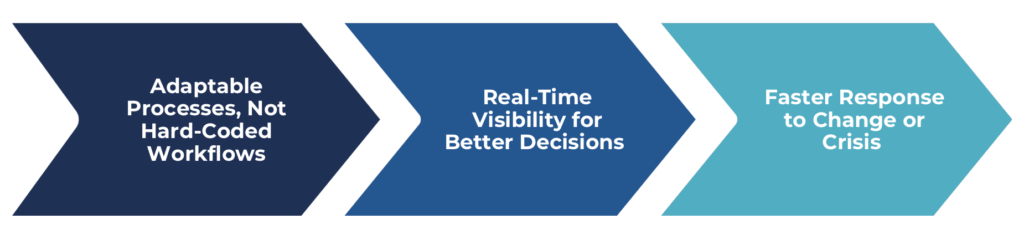
1. Adaptable Processes, Not Hard-Coded Workflows 

With IFS, agencies can update workflows as mandates or priorities evolve—without costly re-engineering. Whether you need to incorporate a new inspection process, revise procurement approval steps, or track a new asset class, IFS makes it possible in weeks, not months. 

This means your platform can evolve as your mission does—without sacrificing structure or traceability. 

2. Real-Time Visibility for Better Decisions 

IFS breaks down operational silos and provides decision-makers with actionable insights. From project performance and asset health to labor availability and compliance status, dashboards and reports are updated in real time, and accessible by the right people, at the right time. 

No more chasing status updates or waiting for end-of-quarter reports. With IFS, you manage proactively, not reactively. 

3. Faster Response to Change or Crisis 

In today’s environment, public sector leaders must be ready to respond—whether it’s a supply chain disruption, a funding reallocation, or a maintenance emergency. 

IFS supports scenario planning, cost forecasting, and resource reallocation on the fly. Because it’s modular and cloud-based, agencies can scale, shift, or reprioritize operations quickly—without sacrificing governance.

A Platform Aligned with the Public Trust

The work of public service comes with an additional responsibility: stewardship. 

Every dollar spent, every decision made, every asset maintained is accountable to stakeholders, elected officials, and the public itself. That’s why Oxalis and IFS work together to deliver systems that: 

  • Increase transparency and audit readiness 
  • Reduce compliance risk and manual overhead 
  • Support mission continuity in changing environments 
  • Foster accountability, traceability, and trust 

Whether you’re overseeing fleet operations, managing a shipyard, modernizing IT infrastructure, or supporting civilian services, IFS ensures your operations are secure, compliant, and future-ready.

How Oxalis Helps
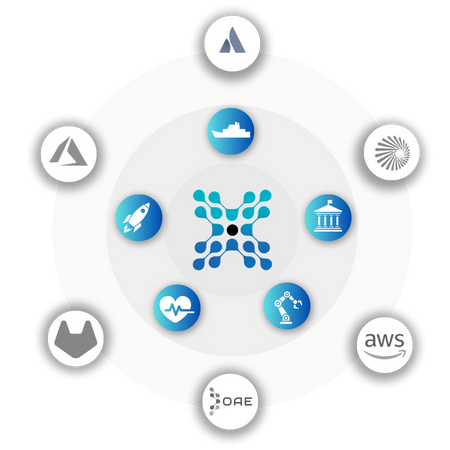
As a strategic systems integrator and public sector specialist, Oxalis brings more than implementation support: we bring operational fluency. 

We understand your regulatory landscape, operational tempo, and stakeholder pressures. We help you: 

  • Map compliance needs into IFS configurations 
  • Design workflows that reflect real-world execution 
  • Migrate securely and minimize disruption 
  • Train your workforce for long-term success 
  • Stay aligned to emerging policies and mandates 

With Oxalis, your IFS investment becomes a catalyst for operational maturity, not just a software upgrade.

The Bottom Line

Compliance and agility are no longer at odds. With IFS, public sector organizations gain the tools to govern with discipline and operate at speed, and without compromise. 

If your agency is being asked to do more with less, under greater scrutiny and tighter deadlines, IFS offers a proven, secure, and scalable foundation. Oxalis helps you unlock its full potential.

Let’s build something resilient, responsive, and ready for what’s next.

Talk to our team today to explore how IFS can support your mission.
10 Ways Modern ERP Simplifies Compliance (and Saves Your Sanity)

At-a-Glance: Modern ERP systems like IFS Cloud embed compliance into daily operations—from audit trails and role-based access to automated reporting and policy-aligned workflows. This blog highlights 10 ways ERP modernization helps public sector teams reduce risk, prepare for audits, and eliminate the stress of manual oversight. For CIOs and compliance leaders, it’s not just about passing the next audit—it’s about building a system that supports every one after that.

Home » IFS

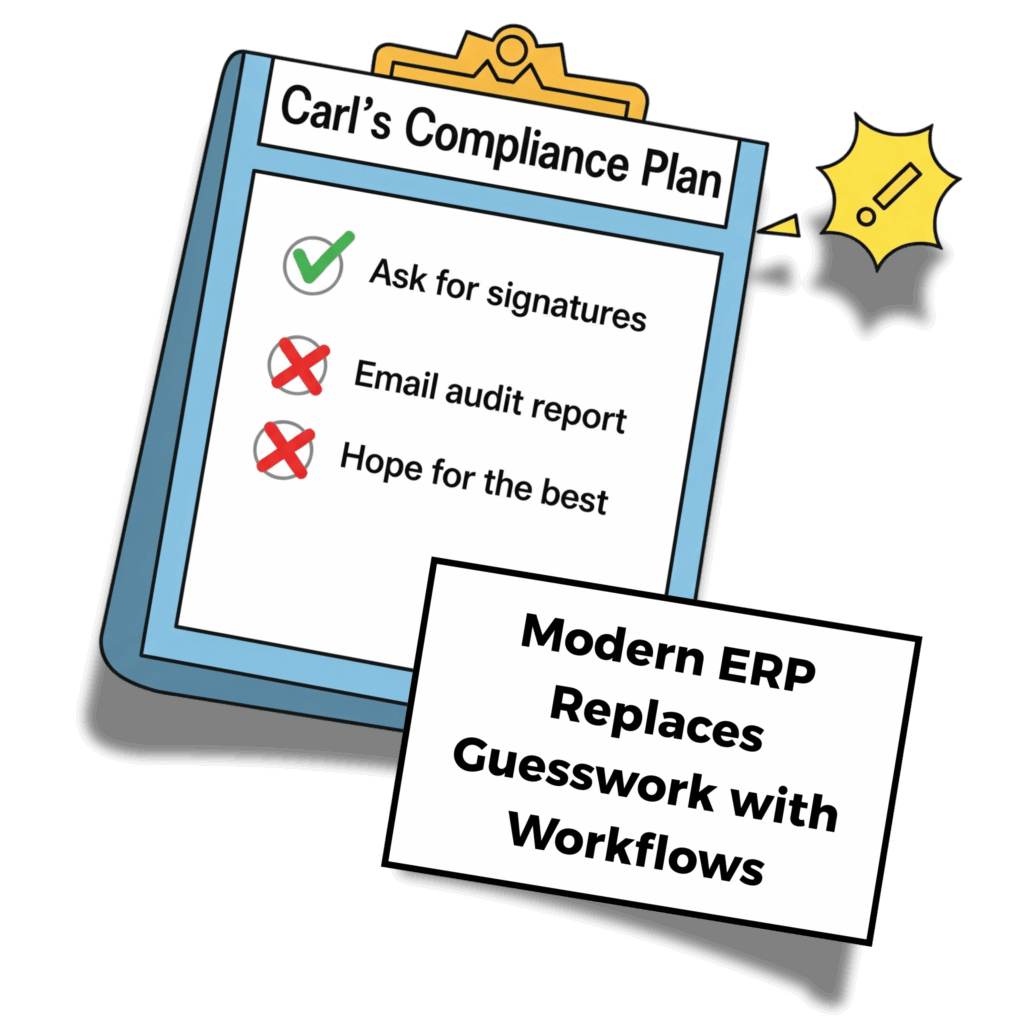
Compliance pressure is real—especially if you’re running on spreadsheets, legacy tools, or crossing your fingers before an audit. If you’ve ever lost sleep wondering if that approval was documented (or if your coworker Carl remembered to upload the inspection report), you’re not alone.

Modern ERP platforms like IFS Cloud take the drama out of compliance. Instead of treating it like an add-on, IFS builds it right into your everyday workflows—so you can stop chasing signatures and start focusing on what actually matters.

Here are 10 ways ERP modernization makes compliance easier, smarter, and (yes) sleep-worthy.

1. Real-Time Audit Trails

Everything’s tracked: approvals, edits, handoffs—complete with time stamps. You don’t have to piece it together later. It’s already there.

No more digital archeology during audit prep.

2. Role-Based Access Control

Only the right people can approve, edit, or access sensitive stuff. Built-in roles mean fewer “oops” moments and cleaner records.

Less micromanaging. More trust.

3. Policy-Aligned Workflows

Need a three-step sign-off for inspections? Done. Want purchasing to always route through finance? Easy. Your workflows, your rules.

Set it once. Let it roll.

4. Compliance Dashboards That Actually Tell You Something

You shouldn’t have to run six reports just to see what’s expiring next month. Dashboards highlight risks before they become headaches.

Red = danger. Green = good. You get the idea.

5. Auto-Generated Paper Trails (Without the Paper)

Whether it’s for grant funding, certifications, or federal audits, IFS gathers the right data and spits out what you need—when you need it.

Modern ERP automates what Carl used to manage manually

Instant receipts for the people who love paperwork.

6. Digital Signatures & Approvals

No chasing people for scribbles. Approvals happen in-system, with logs to prove it.

Carl can’t “forget” this one.

7. Training & Certification Tracking

Know who’s qualified (and who’s not). Get alerts before credentials expire and avoid the awkward “wait, they did what?” conversations.

Because qualified people doing qualified work is the goal.

8. Version Control + Change Tracking

Who changed that form? When? Why? With modern ERP, you’ll know.

Transparency without the witch hunt.

9. Built-In Security + Compliance Frameworks

IFS supports FedRAMP-ready deployments, encrypted data, and strict access controls—so your system stays secure andcompliant.

Peace of mind for your CISO *and* your inspector general.

10. No More “Tribal Knowledge” Dependencies

If your audit plan lives in someone’s head—or worse, a personal folder—you’re one PTO request away from panic. Modern ERP puts process knowledge where it belongs: in the system.

Sleep easy knowing everything’s documented (even Carl’s magic spreadsheet).

Modern ERP Makes Compliance a Feature—Not a Burden

Compliance shouldn’t be scary. With IFS Cloud, it becomes second nature—automated, trackable, and built into how your teams already work.

If your current ERP is making compliance harder than it needs to be, we can help.

10 Things Modern ERP Does That Legacy Systems Never Could

At-a-Glance: Legacy ERP systems like SAP ECC, R/3, Oracle EBS, and JD Edwards weren’t built for today’s mission-driven, asset-intensive operations. Modern ERP platforms like IFS Cloud deliver what legacy systems can’t: real-time visibility, mobile field service, compliance-first architecture, and rapid time-to-value. This blog explores 10 essential capabilities that distinguish modern ERP from its predecessors, offering public sector leaders a smarter, more resilient path to operational excellence.

Legacy ERP systems were built for a different era—one where back-office processes were relatively static, compliance was manual, and field operations were an afterthought. But in today’s mission-driven, asset-intensive world, organizations need more than just a digital ledger. They need real-time visibility, operational agility, and systems that flex with changing demands.

That’s where modern ERP platforms like IFS Cloud come in.

The reality is, many public sector and regulated organizations are still running outdated ERP systems—often from vendors like SAP (ECC, R/3, Business Suite) or Oracle (E-Business Suite, JD Edwards, PeopleSoft). These platforms were foundational at the time but weren’t built to support real-time service delivery, field operations, or modern compliance requirements. Today, they struggle under the weight of customizations, expensive upgrades, siloed data, and limited agility.

Here are 10 things modern ERP does—things legacy systems simply weren’t designed for:

1. Connects Assets, People, and Projects in Real Time

IFS Cloud ERP isn’t just about tracking transactions. It links field teams, assets, inventory, and workflows on a single platform—accessible in real time, from anywhere.

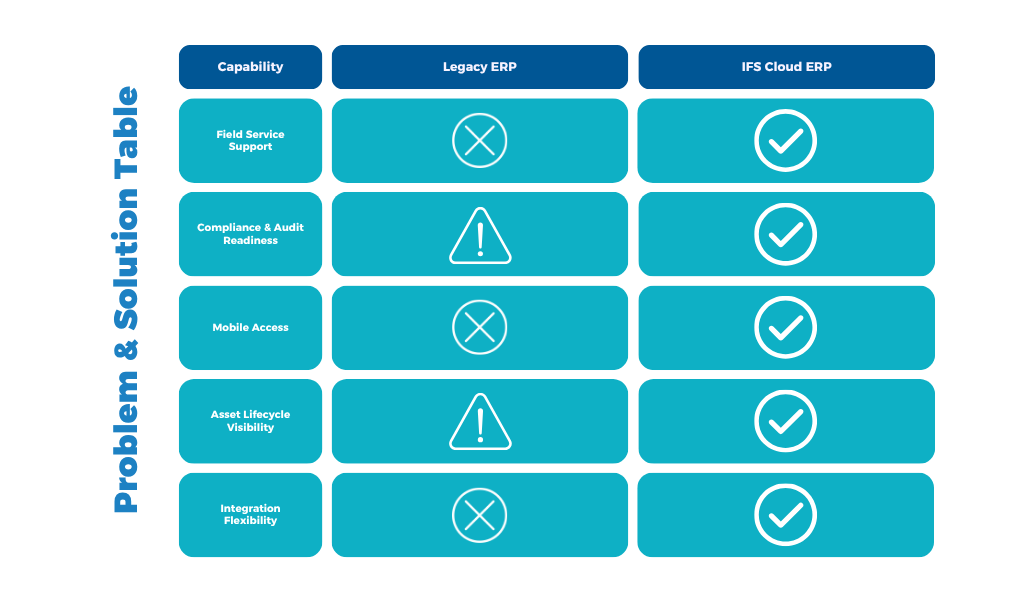
Legacy ERP: Built for finance.
Modern ERP: Built for operations.

2. Supports Field Service and Mobile Teams Out of the Box

Mobile crews need data at their fingertips. IFS Cloud includes native Field Service Management (FSM) tools to support dispatch, maintenance, and inspections.

Legacy ERP: Desktop-bound.
Modern ERP: Mobile-enabled.

3. Adapts to New Mandates and Policies—Without Rework

Legacy ERP: Hard-coded and inflexible.
Modern ERP: Built for change.

Feature comparison between legacy ERP and modern ERP like IFS Cloud

4. Delivers Built-In Compliance and Auditability

With configurable workflows, modern ERP lets you respond to funding changes, compliance shifts, or new operational models without starting from scratch.

Need role-based access, real-time logging, or automated audit trails? IFS makes it easy. No bolt-ons. No spreadsheets. No surprises at audit time.

Legacy ERP: Add-ons and afterthoughts.
Modern ERP: Compliance-first.

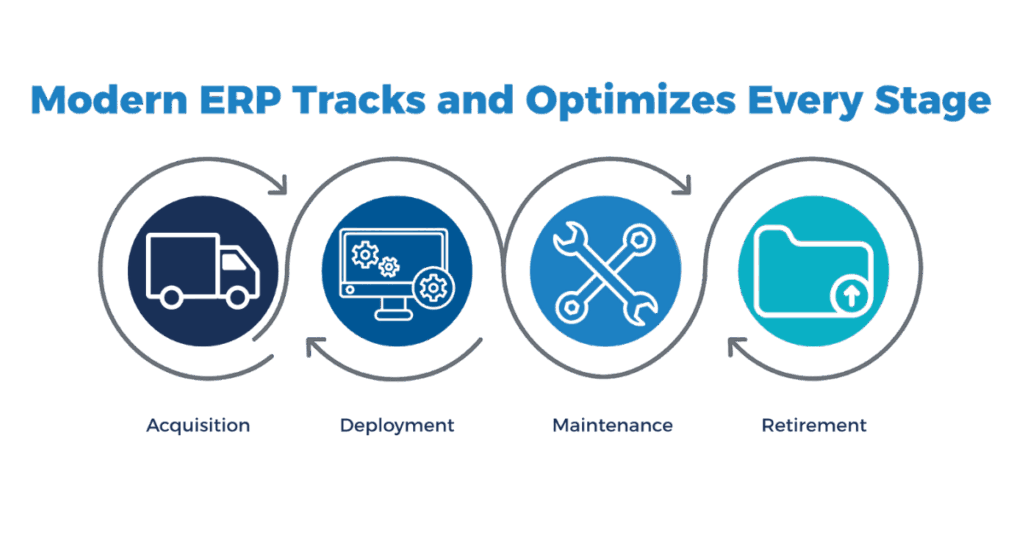
5. Provides Visibility Across the Entire Asset Lifecycle

From acquisition to retirement, modern ERP helps you track, maintain, and optimize your assets—whether it’s a fleet, facility, or field equipment.

Legacy ERP: Manages assets like inventory.
Modern ERP: Manages assets like investments.

Modern ERP enables full asset lifecycle visibility and planning

6. Improves Planning with Real-Time Operational Data

Modern ERP pulls live data from across your org to support proactive decision-making, from project scheduling to resource allocation.

Legacy ERP: Reports after the fact.
Modern ERP: Informs in the moment.

7. Reduces IT Overhead with Cloud-Native Architecture

With IFS Cloud, you don’t need to manage infrastructure or worry about server maintenance. While IFS does release regular upgrades (typically twice per year), the platform handles the heavy lifting—so you stay current without managing it all in-house.

Legacy ERP: Hardware-heavy and expensive to upgrade.
Modern ERP: Scalable and streamlined.

8. Integrates Seamlessly with Tools You Already Use

Modern ERP doesn’t live in a silo. IFS integrates with Jira, Power BI, legacy finance systems, and more—so you get continuity, not disruption.

Legacy ERP: Custom integrations required.
Modern ERP: Plug-and-play flexibility.

9. Speaks the Language of Your Industry

IFS was designed for asset-intensive, service-driven sectors like defense, manufacturing, shipbuilding, and public infrastructure, not just generic business functions.

Legacy ERP: One-size-fits-none.
Modern ERP: Industry-specific by design.

10. Delivers Measurable ROI Faster

Many IFS customers see value within 6–12 months, from improved uptime and audit readiness to faster procurement cycles and lower total cost of ownership.

Legacy ERP: Long runway, slow payoff.
Modern ERP: Fast track to impact.

Oxalis is an IFS Silver Channel Partner

Ready to See the Difference?

Modern ERP isn’t just an upgrade—it’s a shift in how your organization operates. Whether you’re supporting a shipyard, managing public infrastructure, or overseeing field services, IFS Cloud helps you deliver with clarity, confidence, and control.

Let’s explore what ERP modernization could look like for your team.

Modern ERP for Ship Repair: Why IFS Is the Maritime Advantage

Executive Summary: IFS Cloud is a modern ERP platform purpose-built for complex, asset-intensive operations like ship repair and maritime maintenance. Unlike generic ERP systems, IFS offers deep functionality for field service coordination, asset lifecycle management, work order execution, and compliance—making it ideal for shipyards serving the U.S. Navy and defense sector. Its modular, cloud-native architecture allows for phased modernization, real-time visibility, and audit-ready operations, helping maritime organizations reduce downtime, improve planning, and meet contract demands with confidence.

Shipyards aren’t like other industrial environments. The operational demands are relentless, the equipment is massive, and the stakes—often tied to national defense—are high. Maintenance, repair, and overhaul (MRO) workflows must balance precision, speed, and accountability. For public-sector shipyards and maritime contractors, these challenges are amplified by compliance mandates, fragmented systems, and aging infrastructure.

That’s why more shipyards are turning to IFS Cloud—an enterprise platform that doesn’t just understand complex operations; it’s built for them.

Built for Shipyard Realities

Unlike generic ERP solutions that focus primarily on back-office functions, IFS Cloud provides purpose-built tools for maintenance and repair operations. That means:

  • Field Service Management (FSM) for mobile crews and dispatch coordination
  • Enterprise Asset Management (EAM) for end-to-end visibility into ship systems and facility assets
  • Work Order and Project Execution to manage scope, cost, and timelines with clarity
  • Inventory and Procurement Control to prevent delays and shortages
  • Compliance-First Design for tracking audit history, certifications, and contract obligations

Shipyards often operate in a hybrid mode—balancing long-term capital projects with short-term repairs, emergency maintenance, and contractor coordination. IFS supports all of it within a unified platform.

Why Legacy Systems Fall Short

Many public-sector shipyards still rely on outdated legacy ERPs, homegrown scheduling tools, or even spreadsheets to track work orders and asset status. These systems:

  • Lack real-time visibility
  • Struggle with audit and inspection readiness
  • Can’t adapt quickly to shifting mission priorities
  • Silo data across planning, procurement, operations, and compliance teams

The result? Delayed projects, compliance risk, and limited insight into operational readiness.

IFS: Purpose-Built for Maintenance and Repair

IFS Cloud is modular, flexible, and field-ready. You can start where it hurts—whether that’s asset tracking, MRO scheduling, or inventory visibility—and scale over time. With IFS, you get:

  • A single source of truth for all work orders, assets, and updates
  • Role-based access and mobile support for on-the-ground teams
  • Time-to-value measured in months, not years
  • Support for government-grade compliance (FedRAMP-ready architecture, audit logging, and more)
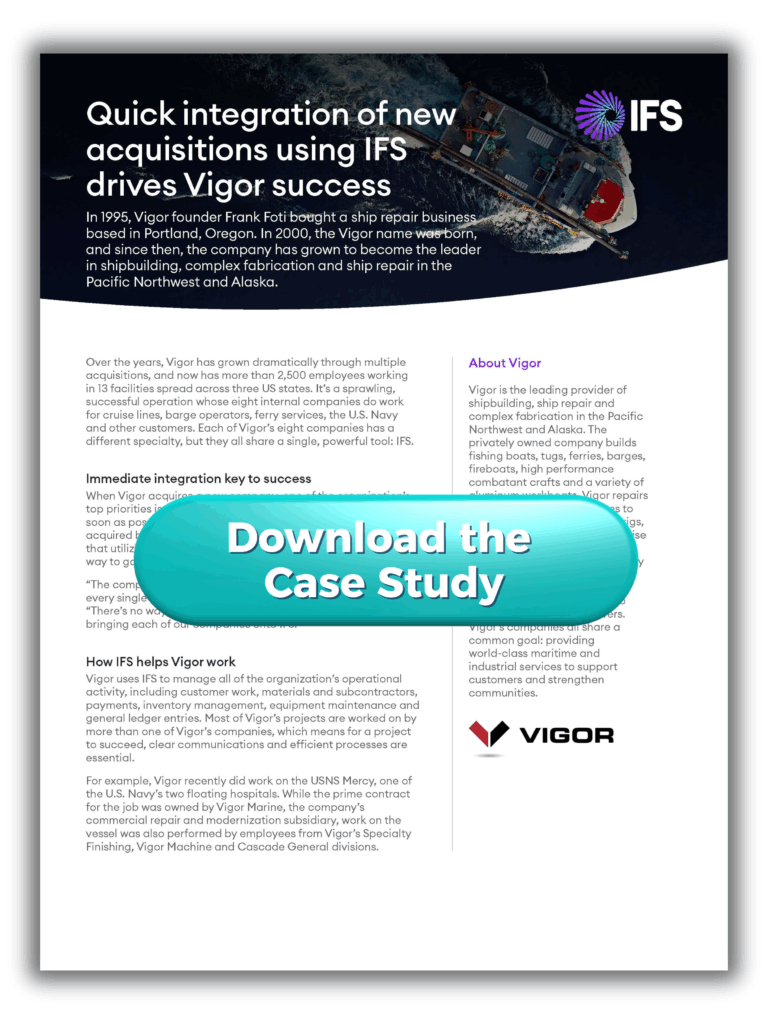
Download the Case Study

It’s not about adding more software—it’s about finally connecting the systems that keep your operations moving.

Real Results in the Real World

Shipyards that adopt IFS are seeing tangible results:

  • Fewer delays thanks to accurate planning and mobile access
  • Improved resource utilization across crews and materials
  • Clear audit trails that reduce inspection friction
  • Modern UX that accelerates adoption and reduces training fatigue

And because IFS integrates with platforms like Jira, Power BI, and legacy financial systems, modernization doesn’t require a “rip and replace” approach.

The Oxalis + IFS Advantage

At Oxalis, we’ve worked with some of the most mission-critical shipyards in the country—supporting U.S. Navy maintenance facilities, prime contractors, and maritime repair operations. We understand what it takes to align technology with complex, compliance-driven work.

As an IFS implementation partner with deep expertise in public sector and regulated environments, we help you:

  • Assess your current workflows and identify high-impact improvements
  • Design a roadmap that supports funding cycles and contract obligations
  • Implement and train in a way that empowers your teams, not burdens them
  • Support adoption and optimization over time

Oxalis Ship Repair System (OSRS), now integrated with IFS capabilities, is just one example of how we tailor technology to your mission.

Ready to Modernize Your Shipyard Operations?

Whether you’re facing aging infrastructure, increased demand, or leadership pressure to modernize, IFS Cloud offers a smarter way forward. And with Oxalis by your side, you’re not just implementing software—you’re building operational resilience, audit confidence, and mission readiness.

Let’s talk about how IFS can support your shipyard.

What Is IFS? And Why It’s Built for Complex Industries

At a Glance: What Is IFS? Why It’s Built for Complex Industries

IFS Cloud is a modern enterprise software platform purpose-built for asset-intensive, service-driven organizations. Unlike traditional ERP systems that prioritize generic back-office functions, IFS focuses on industries with complex operations—such as government, defense, shipbuilding, and infrastructure. It offers fully integrated capabilities across asset management, field service, project execution, finance, and compliance—all in a modular, cloud-native architecture.

IFS is uniquely suited to public sector and regulated industries where agility, auditability, and operational resilience are non-negotiable. It enables organizations to adapt to shifting mandates, modernize legacy systems, and reduce downtime while maintaining full visibility across the asset lifecycle.

Public agencies and contractors choose IFS for its time-to-value, intuitive workflows, and secure deployment options. Oxalis—a trusted implementation partner with deep expertise in the public sector—helps organizations align IFS to their mission through strategic consulting, change enablement, and scalable deployment.

If you’re seeking an ERP solution that can flex with your needs, simplify compliance, and drive smarter service delivery, IFS Cloud—backed by Oxalis—delivers a future-ready foundation.

Public sector agencies don’t have the luxury of simple problems. Whether you’re managing infrastructure, defense systems, healthcare facilities, or municipal services, you’re operating in a high-stakes environment—one where compliance, asset performance, and real-time coordination matter.

That’s exactly where IFS shines.

IFS is a modern, cloud-based Enterprise Resource Planning (ERP) platform purpose-built for organizations with complex operations. Unlike traditional ERP solutions that treat all industries the same, IFS focuses on asset-intensive, service-centric environments—like government, defense, utilities, aerospace, and shipbuilding.

IFS at a Glance: A Platform That Aligns With Your Mission

IFS Cloud ERP

IFS offers a unified, modular platform with capabilities that span:

  • Enterprise Asset Management (EAM) – Track, maintain, and optimize asset performance across lifecycles.
  • Field Service Management (FSM) – Coordinate mobile teams, improve service delivery, and reduce downtime.
  • Project and Work Order Management – Gain visibility into costs, progress, and compliance from day one.
  • Cloud ERP and Finance – Streamline procurement, budgeting, and accounting with public-sector-specific workflows.
  • Built-in Compliance – Align with federal, state, and local requirements using secure, auditable, policy-aligned processes.

This isn’t just another ERP system—it’s a platform that speaks the language of public sector missions.

Why Legacy ERP Tools Can’t Keep Up

Many public sector organizations still rely on older, monolithic ERP platforms or patchworked systems that weren’t designed for today’s dynamic needs. These systems often struggle with:

  • Lack of agility when policy, leadership, or funding priorities shift
  • Audit challenges due to poor documentation or manual processes
  • Siloed data across departments or divisions
  • Slow implementation cycles that delay modernization

IFS eliminates these barriers with a cloud-first, modular approach that’s easier to deploy and manage. You can start with asset or service management—and scale at your pace.

Built for the Public Sector. Proven in the Real World.

Public agencies, shipyards, infrastructure providers, and defense contractors worldwide trust IFS because it offers:

  • Mission alignment: Designed to support regulated environments and evolving mandates
  • Operational flexibility: Adaptable to unique workflows, budgets, and reporting needs
  • Faster time to value: Most IFS deployments show measurable ROI in under a year
  • Secure architecture: Supports FedRAMP-ready environments and other compliance frameworks

The Oxalis + IFS Advantage

At Oxalis, we specialize in helping public sector teams modernize with confidence. As an IFS Partner with deep experience in regulated industries, we don’t just implement software—we align technology with your mission.

Our services include:

  • Strategic ERP consulting
  • Solution design and rollout
  • Change management and training
  • Ongoing support and optimization

We know what’s at stake—and we deliver systems that work the way your teams do.

Ready for What’s Next

Whether you’re maintaining a fleet, managing critical infrastructure, or delivering services to the public, your ERP system should support—not slow down—your mission.

IFS Cloud offers a smarter, more agile way forward. And with Oxalis as your partner, you’re not just buying software. You’re building operational resilience.

Ready to take the next step? Talk to an expert.

From Burden to Breakthrough: How Cloud ERP Outpaces Legacy Systems

At a Glance: Why Are Businesses Moving from Legacy ERP to the Cloud?

Legacy ERP systems are no longer built for the way modern businesses operate. They’re costly to maintain, difficult to integrate, and lack the agility needed in fast-paced industries. Cloud ERP solutions—like IFS Cloud—solve these challenges by offering flexibility, security, and real-time data access. In this blog, Oxalis explains why organizations are making the shift and how IFS Cloud supports scalability, compliance, and smarter operations. As an experienced partner, Oxalis helps organizations migrate with confidence—delivering a tailored, future-ready ERP solution.

Many organizations rely on Enterprise Resource Planning (ERP) systems to manage essential functions like finance, supply chain, operations, and customer service. But for those still using legacy platforms, it’s becoming harder to keep pace with modern demands.

Legacy ERP systems may still “work”—but they weren’t built for flexibility, security, or real-time decision-making. That’s why businesses across industries are shifting to cloud-based ERP solutions like IFS Cloud, which offer a more scalable, intelligent, and cost-effective way forward.

In this blog, we’ll explain what’s holding legacy ERP back, how cloud ERP works, and why Oxalis is the trusted partner to help your organization modernize with IFS Cloud.

IFS Cloud Case Study

What Are the Risks of Staying on Legacy ERP?

ERP systems built decades ago often struggle to support today’s dynamic operations. Here’s where they fall short:

  • Limited Scalability
    Legacy systems often can’t keep up with business growth. Expanding into new markets, launching products, or scaling teams may require expensive workarounds or manual processes.
  • Integration Challenges
    Modern businesses rely on connected ecosystems—CRM platforms, analytics tools, cloud apps. Legacy ERPs frequently lack the architecture to integrate with these tools efficiently.
  • High Operational Costs
    Between hardware upkeep, custom coding, and specialized support, maintaining legacy systems can drain budgets that should be fueling innovation.
  • Security and Compliance Gaps
    Outdated systems are more vulnerable to breaches. Many lack the encryption, auditing, and patching required to meet today’s cybersecurity standards.
  • Outdated Workflows
    Legacy ERPs lock teams into rigid processes, making it difficult to adopt automation, agile methodologies, or AI-enabled features.
  • Poor User Adoption
    With clunky interfaces and limited mobile access, legacy systems frustrate users and create training headaches.

What’s the Difference Between Legacy ERP and Cloud ERP?

Here’s how traditional ERP systems compare to modern, cloud-based alternatives:

Legacy ERPCloud ERP
Installed on-premisesDelivered as-a-service in the cloud
High hardware + IT overheadLower infrastructure costs
Hard to scale or upgradeModular, scalable, and flexible
Limited integrationsEasy integration with modern tools
Manual updates, downtimeAutomatic updates with no disruption
Static user experienceIntuitive UX with real-time insights

With cloud ERP, organizations gain agility, simplify IT operations, and empower teams to make data-driven decisions.

What Are the Benefits of Cloud ERP?

Making the move to cloud ERP—especially with a solution like IFS Cloud—offers tangible business advantages:

1. Cost Efficiency

Reduce overhead by eliminating server maintenance, upgrade cycles, and extensive IT labor.

2. Real-Time Access & Collaboration

Enable teams to work from anywhere, with instant access to accurate data.

3. Better Integration

Connect seamlessly to CRMs, analytics tools, IoT devices, and automation platforms.

4. Built-In Security

Take advantage of encryption, compliance controls, and 24/7 monitoring from cloud providers.

5. Continuous Improvement

Get access to the latest innovations through regular updates—without downtime or disruption.

6. User-Friendly Experience

Empower teams with personalized dashboards, mobile access, and streamlined workflows.

Is IFS Cloud a Good ERP Choice for Regulated Industries?

Cloud ERP

Absolutely. IFS Cloud is designed specifically for organizations in complex, compliance-driven sectors like aerospace, defense, energy, healthcare, and manufacturing.

Key Features That Set IFS Cloud Apart:

  • Unified Platform
    Combines ERP, EAM (Enterprise Asset Management), and Service Management in one cohesive system.
  • Modular Flexibility
    Start small and scale up—adding modules like HR, finance, or supply chain when you’re ready.
  • Industry-Centric Design
    Prebuilt capabilities tailored to regulated industries help you meet compliance without customization overload.
  • AI and Automation
    Embedded machine learning supports forecasting, predictive maintenance, and intelligent scheduling.
  • Deployment Flexibility
    Choose from public cloud, private cloud, or hybrid environments—ensuring you maintain data control and resilience.
  • Ongoing Innovation
    Receive twice-yearly updates and enhancements that keep your ERP modern and competitive.

How Long Does It Take to Migrate from Legacy ERP to IFS Cloud?

Migration timelines vary depending on system complexity, data volume, and organizational readiness. But with the right strategy and support, most migrations can be completed in a matter of months—not years.

At Oxalis, we help organizations build realistic roadmaps and execute with precision to minimize disruption.

Why Choose Oxalis as Your IFS Cloud Partner?

Modernizing your ERP isn’t just a technical shift—it’s a strategic one. That’s why choosing the right partner matters.

At Oxalis, we bring unmatched experience helping organizations modernize ERP platforms across public and private sectors. From strategic planning to hands-on execution, we deliver tailored solutions that work.

Here’s how we help:

  • ERP Migration Expertise
    We specialize in ERP transitions for regulated environments where compliance, uptime, and security are essential.
  • Solution Customization
    We design your IFS Cloud environment based on your needs—not a generic template.
  • Full Lifecycle Support
    Our team stays with you after go-live to ensure long-term value, adoption, and optimization.
  • Proven Track Record
    We’re trusted by leading healthcare, manufacturing, and government organizations to deliver results.

Ready to Take the Next Step?

Your ERP system should support innovation—not stand in its way.

With IFS Cloud and Oxalis by your side, you’ll modernize with confidence and position your business for sustainable growth.

Contact us today to learn how we can help you make the move from legacy ERP to a future-ready cloud solution.

Don’t miss these posts: 

The Executive Guide to IFS Connect 2025: AI, Agility, and Growth

At IFS Connect 2025, one message came through loud and clear: Industrial AI is no longer optional. It’s foundational.

Across a series of global events, IFS laid out its boldest vision yet for the future of enterprise software—one shaped by composable architecture, deeply embedded intelligence, and a growing partner ecosystem designed to accelerate time to value. If you’re leading operations in a complex, asset- or service-intensive environment, the implications are clear: it’s time to stop asking “if” AI belongs in your business processes and start asking “where” and “how fast.”

Here’s what stood out at IFS Connect 2025—and what it means for your organization.

1. AI Is Embedded, Not Bolted On

IFS Connect 2025 envisions a future where IFS Cloud 25R1 introduced more than 200 AI-driven enhancements—many of which deliver immediate, practical value. From inventory forecasting to emissions tracking and 3D maintenance visualization, IFS isn’t treating AI as a buzzword or side project. It’s building intelligence directly into your workflows.

Why it matters:
Executives no longer need to wonder if AI will disrupt their industries—it already is. IFS is providing a platform where AI helps your teams do what they already do, only faster, smarter, and with greater precision. If you’re navigating thin margins, tightening SLAs, or managing critical infrastructure, these are not theoretical advantages—they’re operational necessities.

2. Speed and Strategy: A New Migration Path

IFS’s new Migration Accelerator for SAP customers represents more than just a technical service. It’s a strategic on-ramp for companies ready to move off legacy systems and into a more agile, AI-powered future.

Why it matters:
Executives know the cost of inertia. With ECC end-of-support deadlines looming, IFS is offering a credible, lower-risk path forward—one that comes with a promise of faster ROI and smarter architecture. If you’re exploring alternatives to monolithic platforms, this may be the most opportune moment to take action.

3. Nexus Black: Co-Innovation as a Competitive Advantage

One of the most compelling announcements was the launch of IFS Nexus Black—a program that partners directly with customers to co-develop AI solutions tailored to their most complex challenges.

Why it matters:
Innovation doesn’t always come from off-the-shelf solutions. Nexus Black gives forward-thinking leaders a fast track to prototype and scale AI-powered capabilities that give them a real competitive edge. If your organization is aiming to lead rather than follow, this model of co-creation offers a new blueprint.

4. A Trusted Partner Makes All the Difference

Technology alone isn’t the answer—success comes from how you implement, integrate, and adapt it to your organization’s unique needs. That’s why choosing the right partner is critical. At IFS Connect 2025, it was clear: organizations that see the greatest value from IFS Cloud aren’t going it alone—they’re collaborating with experienced partners who understand their industries, compliance demands, and operational realities.

Why it matters: Oxalis brings together deep industry expertise, agile implementation methods, and a commitment to long-term success. Whether you’re modernizing from legacy systems or expanding into new capabilities like Industrial AI, we help you translate IFS’s innovation into measurable outcomes. The right partner doesn’t just implement software—they unlock its potential.

5. The Real ROI of IFS.ai 

IFS customers are already seeing returns. According to IDC, businesses using IFS Cloud achieved an average ROI of 414% over three years with an 11-month payback period. These gains come not just from automation, but from smarter decisions, better visibility, and reduced risk.

Why it matters:
Investments in enterprise platforms often come under scrutiny—but IFS is backing its claims with real-world results. Whether you’re seeking greater operational resilience, reducing downtime, or scaling services across global teams, IFS.ai is showing that value doesn’t have to wait years to materialize.


 “IFS Cloud enhances our production planning process, enabling more accurate planning and better raw material purchasing.
These improvements significantly improve our business and accelerate the return on our investment.”

Final Thought: From Vision to Execution

IFS is making good on the promise of AI not by introducing generic tools, but by focusing on the industries and functions that need it most. It’s a platform for builders—for companies that need precision, resilience, and speed to adapt.

Whether you’re optimizing field service, managing critical assets, or modernizing enterprise operations, IFS’s approach to embedded intelligence and modular growth deserves serious consideration.

Why Oxalis: Your IFS Partner for What’s Next

At Oxalis, we help organizations in highly regulated, asset-intensive industries navigate complexity and deliver transformation with confidence. As an IFS silver implementation partner, we bring deep domain expertise, agile delivery practices, and a commitment to operational excellence.

What sets us apart is how we tailor IFS Cloud to meet the realities of your business—from compliance-heavy environments to mission-critical service delivery. Whether you’re migrating from SAP, optimizing field service, or looking to bring AI into core workflows, Oxalis helps you move from idea to execution with clarity and speed.

Our close partnership with IFS means we stay ahead of product innovations—like IFS Cloud 25R1 and Nexus Black—and can deliver solutions that are not only future-ready, but value-driven from day one.

Want to know where IFS could take your business next?

Let’s talk.

Maritime MRO Modernization in Focus: Oxalis and IFS Partner to Transform Aerospace and Defense

That’s why we’re proud to announce a strategic partnership with IFS, a global leader in enterprise resource planning (ERP) software, to deliver modern, integrated solutions for maritime MRO modernization, aerospace operations, and defense readiness.

Together, Oxalis and IFS are helping organizations navigate industry transformation with confidence—streamlining operations, improving efficiency, and building the digital foundation for long-term success.

Partnering for Impact: Maritime MRO Modernization and Defense ERP, Reimagined

Our new collaboration brings to market ERP Maritime solutions designed specifically for shipbuilders, MRO providers, and defense manufacturers. With IFS’s proven platform and Oxalis’s deep experience in system integration, cloud strategy, and change enablement, we’re helping organizations tackle today’s biggest challenges head-on.

The U.S. Navy’s selection of IFS as its future MRO platform reflects the direction the industry is moving. As the defense ecosystem prepares for this shift, Oxalis is making sure shipyards, aerospace manufacturers, and industrial partners are equipped to participate—and thrive.

Why This Moment Matters

Across the Maritime, Aerospace, and Defense sectors, organizations face increasing pressure to modernize aging infrastructure, overcome legacy system limitations, and strengthen supply chain resilience.

Whether you’re:

  • shipyard supporting U.S. Navy or allied fleet maintenance
  • defense manufacturer producing critical components
  • An MRO provider ensuring asset uptime and readiness

…the future demands flexible, secure, and insight-driven ERP solutions. Oxalis and IFS are working together to deliver exactly that.

What This Partnership Unlocks

By combining IFS’s industry-leading ERP, EAM, and analytics solutions with Oxalis’s technical expertise and implementation know-how, we’re helping organizations:

  • Streamline MRO operations and reduce downtime
  • Enhance supply chain agility with real-time data and predictive tools
  • Modernize shipbuilding and defense logistics from the ground up
  • Strengthen workforce productivity through smarter digital workflows
  • Ensure compliance and security, meeting the demands of DoD and industry standards

This is about building the systems that support national security, industrial competitiveness, and global defense readiness.

Preparing for What’s Next

At Oxalis, we take pride in helping clients stay ahead of change—not just respond to it. We’re skating to where the puck is going, aligning our capabilities with the strategic direction of the defense industrial base.

This partnership reflects that forward momentum. It’s about positioning businesses to lead, not follow, in a rapidly evolving landscape where operational excellence, digital fluency, and mission alignment are more critical than ever.

Let’s Shape the Future Together

Whether you’re a shipbuilder, aerospace supplier, or MRO provider, the path to modernization is clear—and now is the time to act.

Oxalis and IFS are ready to help you build what’s next.

Reach out today to learn how we can support your digital transformation journey.


Oxalis Partners with IFS to Modernize Shipbuilding and MRO for the U.S. Defense Industry

Strategic Partnership Brings Cutting-Edge ERP and IT Solutions to Shipbuilders, MRO Providers, and Defense Industry Manufacturers

Oxalis Solutions, a leader in technology solutions for highly regulated industries, is pleased to announce a strategic partnership with IFS, a global innovator in enterprise resource planning (ERP) software. This collaboration will empower shipbuilders, maintenance, repair, and overhaul (MRO) providers, and defense industry manufacturers with advanced technology solutions that improve efficiency, streamline operations, and enhance readiness for mission-critical projects.

“IFS is committed to delivering industry-leading cloud solutions that drive operational excellence for asset-intensive industries. Our partnership with Oxalis marks a significant step forward in modernizing U.S. Navy MRO operations, ensuring shipyards and defense contractors have the tools they need to enhance efficiency, readiness, and long-term sustainability,” said Vinod Chumber, Global Head of Channels at IFS.

IFS is a proven leader in enterprise software for asset-intensive industries, including aerospace, defense, and maritime. By partnering with Oxalis—known for its deep expertise in software integration, cloud solutions, and process optimization—this collaboration will provide businesses that support the U.S. Department of Defense (DoD) with state-of-the-art IT solutions to modernize operations and increase supply chain resilience.

“We are excited to partner with IFS to modernize U.S. shipbuilding, repair, and MRO operations,” said Jonathan Malanche, CEO of Oxalis Solutions. “Our combined expertise in software implementation and enterprise technology will help businesses across the defense industrial base embrace digital transformation, improve efficiency, and remain competitive in a rapidly evolving market.”

Addressing the Need for Modernization in Shipbuilding, MRO, and Defense Manufacturing

The U.S. defense industry is undergoing a critical shift toward modernization, driven by aging infrastructure, increased global competition, and the need for more efficient manufacturing and repair processes. Organizations supporting the DoD—including shipbuilders, aerospace manufacturers, and MRO providers—face growing challenges in asset management, workforce optimization, and operational efficiency.

By integrating IFS’s powerful ERP solutions with Oxalis’ expertise in IT system modernization and digital transformation, this partnership will help businesses:

  • Optimize complex supply chains and improve manufacturing processes.
  • Enhance asset management and predictive maintenance capabilities.
  • Increase operational efficiency and reduce downtime in MRO operations.
  • Ensure compliance with DoD and industry-specific security and regulatory requirements.
  • Improve collaboration across shipyards, aerospace firms, and other defense contractors.

A Future-Ready Solution for Defense Industry Leaders

IFS is trusted by leading defense contractors, shipyards, and aerospace organizations for its advanced ERP, enterprise asset management (EAM), and field service management (FSM) solutions. Oxalis Solutions brings deep experience in cloud-based IT modernization, process automation, and large-scale enterprise software deployments across industries that support the U.S. military and defense sector.

Together, Oxalis and IFS will provide the next generation of digital tools that enable organizations to increase agility, optimize production, and improve readiness across shipbuilding, MRO, and defense supply chains.

About IFS
IFS is the world’s leading provider of Industrial AI and enterprise software for hardcore businesses that make, service, and power our planet. Our technology enables businesses which manufacture goods, maintain complex assets, and manage service-focused operations to unlock the transformative power of Industrial AI™ to enhance productivity, efficiency, and sustainability.

IFS Cloud is a fully composable AI-powered platform, designed for ultimate flexibility and adaptability to our customers’ specific requirements and business evolution. It spans the needs of Enterprise Resource Planning (ERP), Enterprise Asset Management (EAM), Supply Chain Management (SCM), Information Technology Service Management (ITSM), and Field Service Management (FSM). IFS technology leverages AI, machine learning, real-time data and analytics to empower our customers to make informed strategic decisions and excel at their Moment of Service™.

IFS was founded in 1983 by five university friends who pitched a tent outside our first customer’s site to ensure they would be available 24/7 and the needs of the customer would come first. Since then, IFS has grown into a global leader with over 7,000 employees in 80 countries. Driven by those foundational values of agility, customer-centricity, and trust, IFS is recognized worldwide for delivering value and supporting strategic transformations. We are the most recommended supplier in our sector. Visit ifs.com to learn why.

About Oxalis Solutions

Oxalis Solutions is a technology consultancy specializing in IT modernization for highly regulated industries, including maritime, aerospace, defense, and manufacturing. As an Atlassian Platinum Solution Partner, Oxalis provides cloud services, ITSM solutions, and enterprise software integrations to help organizations streamline operations and improve business performance.

Don’t miss these posts: