Taming the IT Beast: How to Master Your Operating Model and Maximize Value
The IT department: a constant whirlwind of activity. From launching cutting-edge projects to keeping the email server humming, IT teams juggle a mind-boggling array of responsibilities. This complexity can make prioritization a nightmare, leaving IT leaders feeling like they’re constantly putting out fires instead of driving strategic value.
But fear not! By understanding the nuances of your IT operating model and leveraging the right tools, you can transform your department from a reactive cost center into a proactive value powerhouse.
Understanding the IT Operating Model
Every IT department, regardless of size or industry, operates across three core areas:
Projects: The engine of innovation. Projects deliver the new systems, capabilities, and products that keep your organization competitive and future-ready. Think of things like implementing a new CRM, developing a mobile app, or migrating to the cloud.
Operations: The bedrock of stability. This involves keeping the lights on—ensuring systems are running smoothly, data is secure, and users can access what they need. Daily tasks include server maintenance, security patching, and incident response.
Services: The face of IT. This is where your team provides direct support to end-users, resolving issues, answering questions, and fulfilling requests. Think password resets, software installations, and troubleshooting those “my computer is slow” complaints.
Each of these areas comes with its own unique challenges, and when we focus on one, it can sometimes mean that another gets overlooked. For instance, if we see a rise in service tickets, it might slow down our progress on strategic projects or impact the operations team’s ability to keep our systems running smoothly. It’s important to find a balance that allows us to address all these aspects effectively.
The Balancing Act: Why Prioritization is Key
Each of these areas demands attention, but resources are finite. Focusing on one inevitably means deprioritizing another. A sudden influx of service tickets can derail critical projects, while an operational crisis can drain resources needed for innovation.
Without a clear prioritization strategy, IT departments risk falling into common traps:
Missed SLAs: Failing to meet service level agreements erodes user trust and impacts productivity across the organization.
Stalled Projects: Strategic initiatives get bogged down as resources are constantly diverted to address urgent operational or service issues.
Wasted Effort: Time and money are invested in projects that don’t align with overarching business goals.
Gaining the Upper Hand with Atlassian
The key to effective prioritization? Visibility. You need a clear understanding of where your team is spending its time and how that effort aligns with your strategic objectives. This is where Atlassian shines.
Jira: The gold standard for project management. Jira allows you to track progress, manage resources, and ensure your projects stay on track and deliver maximum value.
Jira Service Management (JSM):Purpose-built for IT service management, JSM streamlines incident management, change requests, and service delivery, freeing up your team to focus on higher-value work.
Analytics Tools: Whether you use Atlassian Analytics or another platform, integrating data from Jira, JSM, and other sources provides a holistic view of your IT operations.
With this data-driven insight, you can:
Identify bottlenecks and resource constraints.
Track SLA compliance and identify areas for improvement.
Ensure projects are aligned with business priorities.
Make informed trade-offs between competing demands.
Strategic Decision Making in Action
Imagine this: your service desk is overwhelmed with tickets. Armed with data from your Atlassian tools, you identify the root cause: a recent software update. You can then make informed decisions, such as:
Temporarily reassign staff to the service desk to address the backlog.
Accelerate development of a self-service portal to deflect common requests.
Implement automated solutions to reduce the need for manual intervention.
The Path to IT Excellence
Mastering your IT operating model is an ongoing journey. By embracing a data-driven approach and leveraging powerful tools like Jira and JSM, you can strike the right balance between projects, operations, and services.
The result? A high-performing IT department that delivers exceptional service, drives innovation, and consistently aligns with your organization’s strategic goals.
Unlock Your IT Potential with Oxalis
Ready to take control of your IT destiny and unlock the true potential of your team? Oxalis, an Atlassian Platinum Solutions Partner specializing in ITSM, can help! We’ve empowered countless organizations to streamline their operations, optimize service delivery, and achieve their strategic goals with Atlassian. Explore our range of services and discover how we’ve helped clients like you conquer the complexities of IT. Or, if you’re ready to take the next step, reach out to one of our experts today for a no-obligation consultation. Let’s build a better IT future, together!
The Why, What, and How of Agile at Scale
In today’s business world, where 86% of companies recognize the importance of agility for success, many still struggle to achieve it. Traditional project management methods are often too slow and rigid to keep up with the ever-changing demands of the market. This is where Agile-at-Scale (now called “Enterprise Strategy & Planning”) comes in. Scaling Agile helps organizations implement agile principles not just within individual teams, but across the entire enterprise, fostering adaptability, collaboration, and customer-centricity.
The Why
The modern business landscape is a whirlwind of technological advancements, evolving customer expectations, and fierce competition. Traditional hierarchical structures and waterfall methodologies, once reliable, now struggle to keep pace. Agile methodologies, with their iterative approach, collaborative spirit, and focus on customer value, offer a way to navigate this dynamic environment effectively. Companies like Spotify and Netflix, pioneers in Agile-at-Scale, demonstrate its potential to drive innovation and achieve remarkable results.
The What
Agile at Scale is not simply about implementing Scrum or Kanban across multiple teams. It’s a holistic approach that involves:
Agile Frameworks: Adopting a suitable framework like SAFe, LeSS, or Scrum@Scale can provide a structured approach to scaling agile.
Organizational Structure: Embracing a leaner, more decentralized structure empowers teams and enables faster decision-making.
Agile Values and Principles: Integrating agile values and principles into the organizational culture is essential for lasting change.
Continuous Improvement: Cultivating a mindset of continuous learning, adaptation, and improvement ensures ongoing progress.
The How
Implementing Agile at Scale is a journey that requires careful planning and execution. Here’s a high-level overview of the process:
Assessment: Begin by evaluating the organization’s current Agile maturity level to identify areas for improvement. Analyze baseline metrics and determine the objectives and key results (OKRs) you aim to achieve through this transformation.
Training and Coaching: Invest in training and coaching to equip teams with the knowledge and skills necessary to succeed in an Agile environment. Foster a shared understanding of Agile principles and practices.
Framework Adoption/Adaptation: Decide whether to adopt or adapt an existing Agile at Scale framework for your organization. While there’s no one-size-fits-all solution, leveraging an existing framework can reduce initial friction, promote learning, and provide a common language for teams.
Pilot Project: Start with a pilot project to gain practical experience, build momentum, and demonstrate value.
Re-evaluate OKRs: After the pilot project, re-evaluate progress toward your OKRs. Compare the current state to the baseline and identify what worked, what didn’t, and what exceeded expectations. This allows you to pivot or pause as needed, ensuring continuous improvement and value delivery.
Scaling Up: Gradually scale Agile across the organization, learning and adapting along the way to ensure a smooth transition.
Remember that tools and technologies, such as Jira Align, can play a crucial role in supporting Agile at Scale implementations by providing visibility, facilitating coordination, and promoting alignment.
To illustrate the power of Agile at Scale, consider the case of the California Department of Health Care Services (DHCS). With the help of Oxalis’ expertise in Jira Align and Agile methodologies, DHCS successfully navigated a complex Agile transformation, resulting in improved efficiency, increased agility, and better strategic alignment.
Agile-at-Scale empowers organizations to navigate today’s dynamic business landscape with confidence. By understanding its core principles and partnering with experienced guides like Oxalis, your organization can embark on a transformative journey toward increased agility, efficiency, and customer-centricity.
Ready to embrace the power of Agile-at-Scale? Partner with Oxalis and unlock your organization’s full potential. Contact us today to learn more about how we can guide your Agile transformation journey.
5 Strategies to Seamlessly Integrate Agile and Waterfall Methods in Your Project Portfolio
In the realm of project management, the age-old debate between Agile and Waterfall methodologies persists. While Agile champions flexibility and iterative development, Waterfall emphasizes structured planning and sequential execution. But what happens when your portfolio includes a mix of both Agile and Waterfall projects? How do you bridge the gap and ensure seamless management across different methodologies?
The reality is that many organizations operate in a hybrid environment, where some projects are best suited for Agile, while others thrive under Waterfall. The key lies in finding a balanced approach that accommodates both methodologies within your portfolio.
Agile: Emphasizes iterative development, frequent feedback, and adaptability to change. Ideal for projects with evolving requirements and a high degree of uncertainty.
Waterfall: Follows a sequential process with distinct phases, emphasizing thorough planning and documentation. Suitable for projects with well-defined requirements and a predictable scope.
Bridging the Gap: Strategies for Success
Here are some practical strategies to effectively manage a portfolio with both Agile and Waterfall projects:
Embrace a Hybrid Approach: Recognize that there’s no one-size-fits-all solution. Adopt a flexible approach that allows for both Agile and Waterfall methodologies, choosing the best fit for each project based on its specific needs and characteristics.
Establish Clear Communication Channels: Foster open communication and collaboration between Agile and Waterfall teams. Ensure that everyone understands the different methodologies, timelines, and dependencies. Regular meetings, shared documentation, and collaborative tools can facilitate effective communication.
Adapt Reporting and Tracking: Adjust your reporting and tracking mechanisms to accommodate both Agile and Waterfall progress. Use tools and techniques that can visualize progress across different methodologies, providing a holistic view of the portfolio’s performance.
Foster a Culture of Collaboration and Learning: Encourage cross-functional collaboration and knowledge sharing between Agile and Waterfall teams. This can help break down silos, promote understanding, and foster a culture of continuous learning. Even with different methodologies, all projects within the portfolio should contribute to common organizational goals. Define clear objectives and metrics that apply across both Agile and Waterfall projects, ensuring alignment and facilitating performance tracking.
Leverage Tools and Technologies: Utilize project management tools that support both Agile and Waterfall methodologies. These tools can help you manage tasks, track progress, and visualize workflows across different project types, providing a centralized platform for portfolio management.
Oxalis: Your Partner in Bridging the Gap
Navigating a hybrid portfolio can be challenging, but you don’t have to do it alone. Oxalis Solutions, an Atlassian Platinum Solution Partner, is your experienced guide in bridging the gap between Agile and Waterfall.
Our team of certified experts takes a creative, consultative approach, understanding the unique dynamics of managing a diverse portfolio. We work closely with you to tailor solutions that accommodate both methodologies, ensuring seamless integration and optimized performance.
With Oxalis, you can trust that your portfolio management journey will be handled with the utmost care and expertise, ensuring a smooth transition and maximized ROI. We’re committed to your success, providing ongoing support and partnership every step of the way.
Ready to Harmonize Your Portfolio?
Don’t let the Agile vs. Waterfall debate hinder your portfolio’s success. Embrace a hybrid approach, foster collaboration, and leverage the right tools to bridge the gap and achieve seamless portfolio management. Contact us today for a no-obligation consultation and let’s chart your course to a harmonious and high-performing portfolio!
Boost Business Value with Mature ITSM: A Guide to Service Excellence
In today’s fast-paced business environment, IT is no longer just about keeping the lights on. It’s about delivering exceptional service that drives business value and fuels innovation. But if your IT team is stuck in “help desk mode,” constantly reacting to incidents and putting out fires, you’re missing out on the strategic power of mature IT Service Management (ITSM).
So, how do you know where your organization stands on the ITSM maturity journey? Let’s explore the five stages of ITSM maturity and uncover the path to achieving service excellence.
Stage 1: Initial (Chaos)
At this stage, IT processes are often ad hoc, reactive, and inconsistent. There’s a lack of formal procedures, documentation, and metrics. The focus is primarily on resolving immediate issues, with little emphasis on proactive problem-solving or continuous improvement.
Key characteristics:
Firefighting and reactive problem-solving
Limited documentation and standardization
Siloed teams and lack of communication
Technology-centric approach
Stage 2: Repeatable (Basic Processes)
Organizations at this stage have established some basic IT processes and procedures, often documented in informal knowledge bases or wikis. There’s a growing awareness of the importance of service management, but implementation is still inconsistent and often driven by individual heroics.
Key characteristics:
Basic incident and request management processes
Some documentation and standardization efforts
Increased awareness of service level agreements (SLAs)
Limited use of automation and technology
Stage 3: Defined (Formalized Processes)
At this stage, IT processes are well-defined, documented, and standardized across the organization. There’s a focus on process improvement and adherence to best practices, often guided by frameworks like ITIL. Service level management is more mature, with defined metrics and reporting.
Key characteristics:
Formalized incident, problem, and change management processes
Comprehensive documentation and knowledge management systems
Proactive problem-solving and root cause analysis
Increased use of automation and ITSM tools
Stage 4: Managed (Quantitatively Managed)
Organizations at this stage have moved beyond process definition to active measurement and control. Key performance indicators (KPIs) are tracked and analyzed to optimize service delivery and drive continuous improvement. There’s a strong focus on efficiency, effectiveness, and customer satisfaction.
Key characteristics:
Data-driven decision-making and performance reporting
Continuous service improvement initiatives
Proactive identification and mitigation of risks
Strong alignment between IT and business goals
Stage 5: Optimizing (Continuous Improvement)
This is the pinnacle of ITSM maturity, where organizations have achieved a high level of service excellence. Processes are continuously optimized through automation, innovation, and feedback loops. There’s a strong culture of learning and collaboration, with a focus on delivering exceptional customer experiences.
Key characteristics:
Proactive service optimization and automation
Predictive analytics and proactive problem prevention
Well, how do we even start to evaluate where we are? There are so many parts of our operations. Let’s review ten of the most critical aspects of IT service management.
Service Request Management
The process of responding to, coordinating and fulfilling requests for support from customers. This (along with incident management) is the starting point for most all IT service organizations. Largely, this is what customers perceive as the “face of IT” and should be revisited regularly to ensure satisfaction.
Service Level Management
The process of monitoring and reviewing service levels, including the agreement and refinement of those levels. Service level measure the performance of support given to customers, and are often expressed in terms such as “time to resolution”. Further, a service level agreement (SLA) is the defined and agreed upon service levels between the service provider and the customer.
Incident Management
The process of managing incidents (defined as “unplanned events that cause a disruption”), including the identification, resolution and closure of incidents. Immature IT organizations will often refer to this as “fire fighting”, and end up spending a disproportionate amount of time on resolving incidents.
Problem Management
The process of managing problems (defined as “a cause or potential cause of one or more unplanned events”), including the identification, resolution and closure of problems. Where Incidents are often identified and reported by customers, Problems should be identified internally (likely as a result of an Incident). Immature IT organizations often skip Problem management all together, and go from Incident to Incident in perpetuity.
Change Management
The process of assessing, approving, implementing and reviewing changes to the IT environment. This is often in collaboration with DevOps teams, and involves a CAB (change advisory board). Diligent change management will improve your overall service delivery, while helping to avoid unintended incidents.
Knowledge Management
The process of creating, curating, sharing, using, and managing knowledge across the organization. Depending on your approach to Service Request Management, this may be split between internal and customer facing documentation.
Asset and Configuration Management
The process of ensuring an organization’s assets and systems are accounted for, deployed, maintained, upgraded and disposed of when necessary. Often time, the asset management system or CMBD (configuration management database) will be integrated with a scanning tool, to automatically identify assets on an organization’s network.
Capacity Management
The process of assessing, planning for, and monitoring the human capacity of an IT organization. This is how leadership understands if there are enough resources to meet the current and upcoming workload.
Service Continuity Management
The process of planning, testing, and implementing service continuity measures, so that essential services are maintained during unexpected events or natural disasters.
Financial Management
The management of financial aspects of IT services, including forecasting, budgeting, cost management, reduction and charging for IT services. For many immature organizations, IT is seen only as a cost center, and not a value driver. In these cases, there is often too much focus solely on cost reduction.
Oxalis Solutions, an Atlassian Platinum Solution Partner, is your experienced guide on the path to ITSM maturity. Our team of certified experts takes a creative, consultative approach, understanding that each organization’s journey is unique.
We go beyond simply implementing tools and processes. We work closely with you to understand your specific needs and challenges, tailoring our solutions to help you achieve your desired level of maturity. We’re not just improving your IT; we’re optimizing your business, enhancing collaboration, and empowering your teams to deliver exceptional service.
With Oxalis, you can trust that your ITSM journey will be handled with the utmost care and expertise, ensuring a smooth transition and maximized ROI. We’re committed to your success, providing ongoing support and partnership every step of the way.
Ready to Elevate Your Service Management?
Don’t let your IT team remain stuck in reactive mode. Embrace the power of mature ITSM and unlock the strategic value of IT. Contact us today for a no-obligation consultation and let’s chart your course to service excellence!
Unlock a Service-Centric Mindset: The Key to ESM Success
In today’s competitive landscape, exceptional service delivery isn’t just a nice-to-have—it’s a business imperative. But what if we told you that the key to transforming service delivery across your entire organization lies in the principles of IT Service Management (ITSM)?
Enter Enterprise Service Management (ESM), a powerful approach that extends the proven practices of ITSM beyond the realm of IT to encompass all service-providing departments, from HR and finance to facilities and legal.
ESM breaks down silos, streamlines workflows, and empowers employees to deliver exceptional service experiences across the entire enterprise. Let’s explore how ESM can revolutionize your organization.
The ESM Advantage: Key Benefits
ESM isn’t just about applying IT tools to other departments; it’s about adopting a service-centric mindset across the organization. Here’s how ESM can transform your service delivery:
Enhanced Efficiency and Productivity: ESM streamlines workflows, automates tasks, and eliminates redundant processes, freeing up employees to focus on higher-value activities. Imagine onboarding new hires with automated workflows or resolving employee inquiries through a self-service portal.
Improved Employee Satisfaction: ESM empowers employees with easy access to information and services, reducing frustration and boosting morale. Think of a centralized knowledge base for common HR questions or a streamlined process for submitting expense reports.
Increased Customer Satisfaction: By optimizing service delivery across all departments, ESM contributes to a seamless and positive customer experience. Whether it’s resolving customer inquiries faster or providing proactive support, ESM helps you build stronger customer relationships.
Reduced Costs: ESM eliminates inefficiencies, reduces manual errors, and optimizes resource utilization, leading to significant cost savings. Imagine the cost savings from automating invoice processing or streamlining facilities requests.
Greater Agility and Responsiveness: ESM enables organizations to adapt quickly to changing business needs and customer demands. By providing a flexible and scalable service delivery model, ESM helps you stay ahead of the curve.
HR: Streamline onboarding processes, manage employee requests, and provide self-service access to HR information.
Finance: Manage policy reviews, budget allocations, expense reports, and provide efficient financial support services. Manage expense reports, and provide efficient financial support services.
Facilities: Handle maintenance requests, manage work orders, and optimize space utilization.
Legal: Manage contracts, track legal requests, and provide efficient legal support services.
Oxalis: Your Partner in ESM Transformation
Embarking on an ESM journey can be exciting, but it requires careful planning and execution. Oxalis Solutions, an Atlassian Platinum Solution Partner, is your experienced guide in navigating the complexities of ESM implementation.
Our team of certified experts takes a creative, consultative approach, understanding that each organization’s needs are unique. We go beyond simply implementing tools; we work closely with you to understand your specific challenges and goals, tailoring our solutions to optimize service delivery across your enterprise.
With Oxalis, you can trust that your ESM transformation will be handled with the utmost care and expertise, ensuring a smooth transition and maximized ROI. We’re committed to your success, providing ongoing support and partnership every step of the way.
Ready to Embrace the Power of ESM?
Don’t let your organization be held back by siloed departments and inefficient processes. Embrace the power of ESM and unlock the potential for exceptional service delivery across your enterprise. Contact us today for a complimentary consultation, and together, we can outline your path to service excellence!
Conquering the Platform Migration Mountain: A Practical Guide
Let’s face it, in today’s ever-evolving technological landscape, platform migrations are practically inevitable. Whether you’re upgrading to the latest version, switching to the cloud, or moving to an entirely new system, migrating your platform can feel like scaling a mountain. And while it’s tempting to stick with the status quo, delaying the inevitable can lead to hidden costs like decreased productivity, security vulnerabilities, and missed opportunities for innovation.
But fear not, fellow adventurers! With careful planning and the right guidance, you can conquer the platform migration mountain and reach the summit of success.
https://youtu.be/zh6oXWIc5PU?si=QbbRa-kP43WKJO3K
The Challenges Ahead
Before we embark on our journey, let’s acknowledge the challenges that lie ahead. Platform migrations can be complex, involving a multitude of factors that require careful consideration:
Data Migration: Transferring your valuable data accurately and securely is paramount. Common pitfalls include data loss, corruption, and incompatibility issues, so meticulous planning and execution are essential.
Integration Hurdles: Ensuring seamless integration with your existing systems and workflows can be tricky. You’ll need to address API differences and potential compatibility issues to avoid disruptions.
User Adoption & Training: Even the most sophisticated platform is useless if your users don’t embrace it. Effective training and change management strategies are crucial for minimizing resistance and ensuring a smooth transition.
Downtime & Business Disruption: Minimizing downtime during the migration process is critical for maintaining business continuity. You’ll need to plan for contingencies and have rollback options in place to mitigate potential disruptions.
Charting Your Course to Success
Now that we’ve identified the potential obstacles, let’s map out the essential steps for a successful migration:
Assessment & Planning: A thorough Migration Readiness Assessment is your compass and map. This crucial step helps you define clear objectives, scope, and timelines, while identifying and mitigating potential risks before they become roadblocks.
Data Preparation & Cleansing: Think of this as packing your gear for the climb. Ensure your data is clean, consistent, and ready for the journey. Address any data gaps or inconsistencies to avoid problems down the road.
Pilot Testing & Validation: Before you set off on the main trail, it’s wise to test the waters. Conduct pilot testing in a controlled environment to validate data integrity and system functionality, and fine-tune your approach.
Communication & Collaboration: Keep your team informed and engaged throughout the journey. Establish clear communication channels and feedback mechanisms to ensure everyone is aligned and working towards the same goal.
Reaching the Summit: Benefits of a Successful Migration
Reaching the summit of a successful platform migration brings a wealth of rewards:
Enhanced Performance & Scalability: Leverage the latest technologies and infrastructure to boost system performance and responsiveness, ensuring your platform can scale with your growing needs.
Improved Security & Compliance: Address security vulnerabilities and meet compliance requirements, safeguarding your data and your business.
Increased Efficiency & Productivity: Streamline workflows, automate processes, and empower your users with better tools and functionalities, leading to greater efficiency and productivity.
Cost Savings & ROI: Reduce operational costs and maximize your return on investment by optimizing your platform for efficiency and performance.
Our team of certified experts takes a creative, consultative approach, understanding that each migration is unique. We go beyond a “one-size-fits-all” approach, tailoring our solutions to your specific needs and challenges. We’re not just moving your data; we’re optimizing your processes, enhancing collaboration, and empowering your teams to thrive in the new environment.
With Oxalis, you can trust that your migration will be handled with the utmost care and expertise, ensuring a smooth transition and maximized ROI. We’re committed to your success, providing ongoing support and partnership beyond the migration itself.
Don’t let the platform migration mountain intimidate you. With careful planning, the right tools, and a trusted partner like Oxalis, you can conquer the challenge and reap the rewards of a successful migration. Our Migration Readiness Assessment provides the insights you need to make informed decisions and ensure a smooth transition.
Receive a detailed report with a maturity score, risk assessment, and high-level plan – all within your year-end budget. Start the new year with confidence and a plan in place. Contact us today for a no-obligation consultation and to learn more about how we can help you navigate your journey to the summit!
The 7 Key Elements of a Mature Portfolio
Organizations increasingly rely on portfolios to manage their strategic initiatives, drive innovation, and achieve business goals. But simply grouping projects together doesn’t guarantee success. You need a mature portfolio to maximize value and achieve strategic alignment.
What exactly does a mature portfolio look like? It’s more than just a collection of projects; it’s a dynamic system that enables effective decision-making, optimizes resource allocation, and fosters a culture of continuous improvement.
Let’s explore the seven key elements of a mature portfolio:
1. Strategic Alignment
A mature portfolio is tightly aligned with the organization’s strategic objectives. Every project within the portfolio contributes directly to achieving those objectives, ensuring that resources are invested in initiatives that drive the most value. This requires a clear understanding of the organization’s vision, mission, and strategic priorities. Organizations with a clearly communicated set of objectives and a disciplined project in-take process are much more likely to maintain alignment between project deliverables and business outcomes.
2. Clear Governance
Effective governance provides a framework for decision-making, prioritization, and oversight. A mature portfolio has well-defined roles, responsibilities, and processes for managing projects, ensuring accountability and transparency. This includes establishing clear decision-making authorities, communication channels, and escalation procedures. Organizations that streamline effective communication from project teams up to senior leadership, as well as down through the organization from senior leadership to teams, by using a unified work management platform eliminate communication loss and inefficiency.
3. Optimized Resource Allocation
Resources are finite, and a mature portfolio optimizes their allocation to maximize value. This involves effectively balancing resources across projects, prioritizing initiatives with the highest potential return, and ensuring that resources are aligned with the organization’s strategic goals. Organizations with a flexible platform for managing work get to realize the benefits of resource allocation optimizations much more quickly than organizations that require team members to learn new tools and techniques.
4. Data-Driven Insights
A mature portfolio relies on data to inform decision-making and drive continuous improvement. This includes tracking key performance indicators (KPIs), analyzing trends, and using data to identify risks, opportunities, and areas for optimization. Data-driven insights enable informed decisions about project selection, prioritization, and resource allocation. A culture that empowers local decision-making based on data is much more nimble, often able to execute on data and learnings more quickly than organizations that push tactical decision-making outside of project teams.
5. Agile and Adaptive
A mature portfolio is agile and adaptive, able to respond quickly to changing market conditions, business needs, and advances in technology. This requires a flexible approach to project management, embracing agile methodologies, and incorporating feedback loops to ensure the portfolio remains aligned with strategic objectives.
6. Continuous Improvement
A mature portfolio does not see the organization as a static entity; it’s a dynamic system that evolves and improves over time. This requires a commitment to continuous improvement, incorporating lessons learned, and actively seeking ways to optimize processes, enhance efficiency, and maximize value delivery. Effective organizations have a culture of continuous improvement supported by a set of working principals and frameworks to ensure that the portfolio improves with every iteration.
7. Effective Communication
Clear and consistent communication is essential for a mature portfolio. This includes establishing effective communication channels, providing regular updates to stakeholders, and fostering a culture of transparency and collaboration. Effective communication ensures that everyone is aligned and working towards the same goals. Having a unified or well-integrated platform for communication isn’t enough for an organization – mature portfolio management also champions of a culture of timely and impactful communications with concepts and tools such as OKRs, retrospectives, KPIs, risk and decision registers, and dashboards.
Building a mature portfolio can be a challenging journey, but you don’t have to go it alone. Oxalis Solutions, an Atlassian Platinum Solution Partner, is your experienced guide in navigating the complexities of portfolio management.
Our team of certified experts takes a creative, consultative approach, understanding that each organization’s needs are unique. We go beyond simply implementing the tools and technology of Portfolio Management; we work closely with you to understand your specific challenges and goals, tailoring solutions to optimize your portfolio and drive strategic alignment.
With Oxalis, you can trust that your portfolio management journey will be handled with the utmost care and expertise, ensuring a smooth transition and maximized ROI. We’re committed to your success, providing ongoing support and partnership every step of the way.
Ready to Unlock Your Portfolio’s Potential?
Don’t let your portfolio be a collection of disjointed projects. Embrace the principles of portfolio maturity and unlock the power of strategic alignment, optimized resource allocation, and data-driven decision-making. Contact us today to start your journey to a more effective and impactful portfolio management process with an assessment of your current tools and practices.
What Is Atlassian Rovo? A Guide to Your New AI Teammate
In a world where time is scarce and information is scattered, teams face constant pressure to do more with less—and do it faster. They manage daily tasks, coordinate across functions, switch between tools, chase down information, and repeat manual processes, all of which drain valuable time and energy. Enter Atlassian Rovo: your new AI teammate, designed to help teams move faster, work smarter, and stay focused on what matters most.
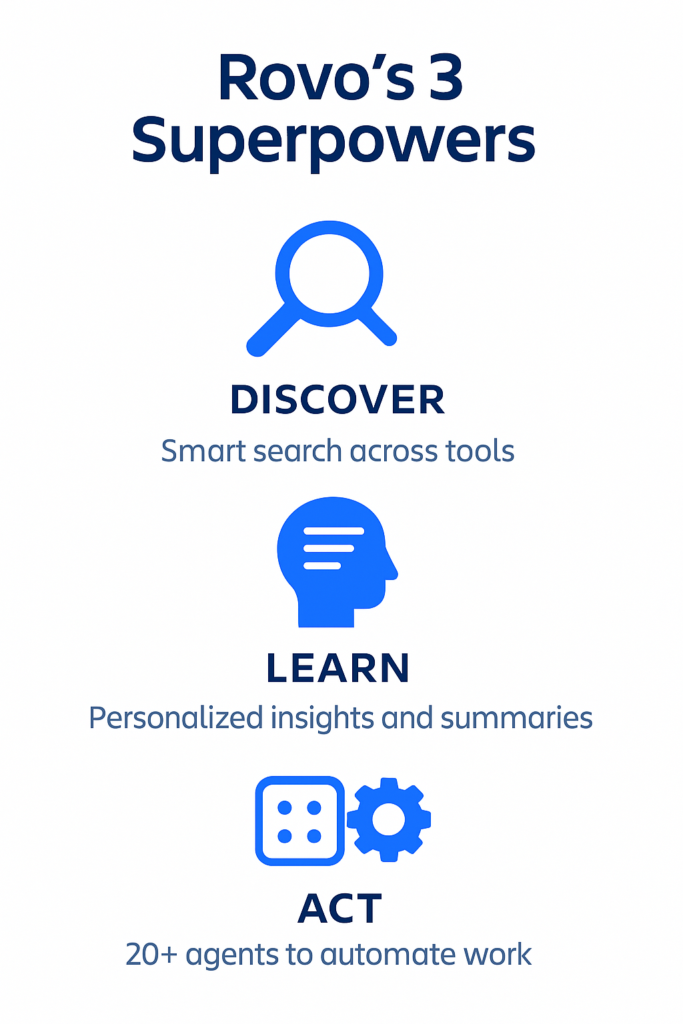
Rovo, Atlassian’s generative AI assistant, builds itself natively into Jira, Confluence, Bitbucket, Trello, and other Atlassian tools. Unlike traditional chatbots or isolated AI features, Rovo embeds itself in the flow of work. It doesn’t just answer questions—it takes action. Over 20 prebuilt AI agents, enterprise-grade search, and smart summarization tools empower teams to automate routine work, find information instantly, and generate content on demand.
Whether a project manager wrangles dozens of Jira tickets, an IT leader triages service requests, or an executive tries to stay in the loop, Rovo designs itself to reduce friction and elevate productivity across the board.
What Can Rovo Do?
Rovo combines three powerful capabilities to help you and your team move with speed and confidence:
Search: Rovo indexes data across your Atlassian tools (and connected apps like Google Drive, SharePoint, Slack, and GitHub) to deliver fast, permission-aware answers to questions like “What’s the current status of Project Phoenix?” or “Who owns the data migration effort?”
Chat: Ask Rovo to summarize Jira tickets, pull highlights from Confluence pages, or even explain internal acronyms. Its conversational AI is aware of your projects, team members, and goals.
Agents: Rovo’s 20+ prebuilt AI agents can automate common workflows—like drafting release notes, organizing your Jira backlog, generating meeting summaries, or translating content—all with a human-in-the-loop design that keeps you in control.
In short, Rovo helps your team spend less time chasing details and more time driving results.
Why Rovo Matters for Regulated Teams
At Oxalis, we understand the challenges that come with delivering technology solutions in highly regulated industries. Whether you’re working in government, healthcare, aerospace, manufacturing, or any industry where staying in compliance is of paramount importance, the stakes are high and the workflows are complex. That’s why we’re excited about what Rovo brings to the table.
Rovo vs. Copilot: Choosing the Right AI Assistant
Feature
Atlassian Rovo
Microsoft Copilot
Other AI Assistants (Notion AI, Google Duet, GitHub Copilot)
Natural language search
✔️ Yes (across Atlassian + connected tools)
✔️ Yes (within Microsoft 365 apps)
Varies (Notion AI only in Notion; Duet within Google Workspace)
Document summaries
✔️ Yes (Jira issues, Confluence pages, etc.)
✔️ Yes (Word, Teams, Outlook)
Partial (Notion AI, Duet AI)
Content generation
✔️ Yes (release notes, PRDs, emails, etc.)
✔️ Yes (emails, docs, slides)
✔️ Yes (Notion AI, Duet AI)
Prebuilt agents to automate tasks
✔️ 20+ available out-of-the-box
❌ No true task agents
❌ None
Query across sources/tools
✔️ Yes (Jira, Confluence, Drive, Slack, etc.)
✔️ Yes (Microsoft Graph only)
❌ Limited or unavailable
Integrated with Jira
✔️ Native integration
❌ Requires third-party connectors
❌ Not supported
Integrated with Confluence
✔️ Native integration
❌ Requires third-party connectors
❌ Not supported
Integrated with code tools
✔️ Bitbucket + GitHub integration
❌ No native dev tool integrations
✔️ GitHub Copilot (code only)
Customizable agents/workflows
✔️ Yes (no-code & low-code options)
❌ Not user-configurable
❌ Not user-configurable
Security & enterprise permissions
✔️ Respects Atlassian permissions
✔️ Respects Microsoft Entra permissions
✔️ Workspace-level, varies by platform
Pricing (as of 2025)
$20–24/user/month (Cloud only)
$30/user/month (365 E3/E5 required)
$10–30/user/month (varies by tool)
As an Atlassian Platinum Solution Partner specializing in Cloud, IT Service Management (ITSM), and Enterprise Strategy & Planning, Oxalis has helped organizations modernize their service operations, unify toolsets, and accelerate value delivery. We’ve seen firsthand how the right AI capabilities can unlock speed and efficiency—without sacrificing oversight, security, or compliance.
Rovo respects enterprise-grade permissions and offers transparency into how it’s sourcing and generating content. It integrates directly into the Atlassian tools our customers already use, making it easier to adopt without disrupting existing workflows. For organizations balancing innovation with risk, Rovo offers a secure, scalable path forward.
Getting Started with Rovo
Rovo is currently available for Atlassian Cloud customers as a premium add-on, with more capabilities being added regularly. Organizations can start by activating it in Jira or Confluence and exploring the out-of-the-box agents for project planning, ITSM, engineering, and beyond.
At Oxalis, we’re here to help you unlock the full potential of AI-powered collaboration. From assessing your readiness to designing custom Rovo agents for your business workflows, we offer end-to-end support to ensure Rovo becomes a valuable part of your team.
Ready to meet your new AI teammate? Let’s talk about what Rovo can do for you.
Empower Teamwork: Atlassian Team ’24 Europe Drives AI Evolution
Atlassian Team ’24 Europe just wrapped, and the announcements are making waves! This year, Atlassian focused heavily on AI-powered solutions designed to supercharge teamwork and unlock new levels of efficiency. Here are three key takeaways that you should know about:
1. Rovo: Your AI-Powered Knowledge Hub
Remember that sneak peek of Atlassian’s first AI product at Team ’24 in Las Vegas? Well, Rovo is officially here! This game-changing tool acts as a central knowledge hub for your entire organization, making it easier than ever to find the information you need, when you need it. Rovo offers:
Rovo Search: Say goodbye to endless scrolling. Instantly find the files, conversations, and expertise you need across all your Atlassian tools.
Rovo Chat: Get answers fast with an AI assistant that understands your questions and provides concise summaries of relevant information.
Rovo Agents: Automate tasks and workflows by deploying specialized AI agents that can tackle complex problems and streamline processes.
Why is this a big deal? Rovo breaks down information silos, empowers teams to make data-driven decisions, and boosts productivity by automating tedious tasks. It’s all about working smarter, not harder.
Focus is a new addition to Jira Align specifically designed for executives and leaders. It provides a clear, high-level view of strategic priorities and how they connect to measurable goals like objectives and key results (OKRs). Imagine this:
Real-time insights: Track progress, identify risks, and make informed decisions based on a comprehensive overview of your organization’s work in Jira Align and Jira.
Strategic alignment: Ensure everyone is working towards the same goals by connecting team activities and funding directly to strategic priorities.
Scenario planning: Explore different options and prioritize initiatives with powerful modeling tools.
https://www.youtube.com/watch?v=n0TR46H9BnE&t=8s
Focus helps leaders define, communicate, and execute their strategy with confidence, ensuring everyone is on the same page and driving towards success.
3. Jira: Now For Every Team
Atlassian just redefined Jira at Team ’24 Europe. Forget the old Jira—this is a brand new work hub built for every team, with a fresh look and powerful features that make it more flexible and intelligent than ever.
Key Highlights:
Ultimate Flexibility: Customize how you refer to your work, personalize your navigation, and even add some flair to your workspace.
Boosted Productivity: Leverage custom project templates, conditional formatting, and a centralized attachment hub to streamline your workflow.
AI-Powered Efficiency: Create Jira tasks from Confluence, Slack, and Loom, and let AI automatically break down large projects into manageable steps.
Effortless Alignment: Keep everyone on the same page with integrated Goals and a new Program Board in Plans.
Jira has evolved into a comprehensive platform that connects teams, simplifies workflows, and unlocks new levels of productivity.
The Future of Teamwork is Here
From revolutionizing knowledge access with Rovo to empowering leaders with Focus and transforming Jira into a versatile work hub for all teams, Atlassian Team ’24 Europe delivered a powerful vision of the future of work. These AI-driven innovations promise to unlock new levels of efficiency, collaboration, and productivity for organizations of all sizes. Ready to harness the power of these exciting new tools? Contact the Atlassian experts at Oxalis today for a personalized consultation and discover how these advancements can drive your organization’s success.
Cookie Consent
We use cookies to improve your experience on our site. By using our site, you consent to cookies.
Used by Google Analytics 4 to persist session state and track usage across visits. The XXXXXXXXXX portion corresponds to the Oxalis Google Analytics property ID.
1 year
_gac_
Contains information related to marketing campaigns of the user. These are shared with Google AdWords / Google Ads when the Google Ads and Google Analytics accounts are linked together.
90 days
__utma
ID used to identify users and sessions
2 years after last activity
__utmt
Used to monitor number of Google Analytics server requests
10 minutes
__utmb
Used to distinguish new sessions and visits. This cookie is set when the GA.js javascript library is loaded and there is no existing __utmb cookie. The cookie is updated every time data is sent to the Google Analytics server.
30 minutes after last activity
__utmc
Used only with old Urchin versions of Google Analytics and not with GA.js. Was used to distinguish between new sessions and visits at the end of a session.
End of session (browser)
__utmz
Contains information about the traffic source or campaign that directed user to the website. The cookie is set when the GA.js javascript is loaded and updated when data is sent to the Google Anaytics server
6 months after last activity
__utmv
Contains custom information set by the web developer via the _setCustomVar method in Google Analytics. This cookie is updated every time new data is sent to the Google Analytics server.
2 years after last activity
__utmx
Used to determine whether a user is included in an A / B or Multivariate test.
18 months
_ga
ID used to identify users
2 years
_gali
Used by Google Analytics to determine which links on a page are being clicked
30 seconds
_ga_
ID used to identify users
2 years
_gid
ID used to identify users for 24 hours after last activity
24 hours
_gat
Used to monitor number of Google Analytics server requests when using Google Tag Manager
1 minute
Marketing cookies are used to follow visitors to websites. The intention is to show ads that are relevant and engaging to the individual user.