Break Free from Legacy ITSM: A Smarter Approach with Atlassian’s System of Work

How AI, Collaboration, and Knowledge Sharing are Transforming ITSM

Today’s service management landscape looks very different from even a few years ago. IT teams are no longer simply “keeping the lights on”—they are expected to deliver seamless experiences, power business agility, and drive innovation across the organization.

Yet many service teams are still trapped by outdated, siloed systems that slow down progress and create friction between teams.

Atlassian’s System of Work offers a new path forward. By connecting people, processes, and technology through a unified platform, organizations can transform IT Service Management (ITSM) into a strategic advantage.

Today, we’ll explore how the System of Work reimagines service management—and why it’s time to modernize.
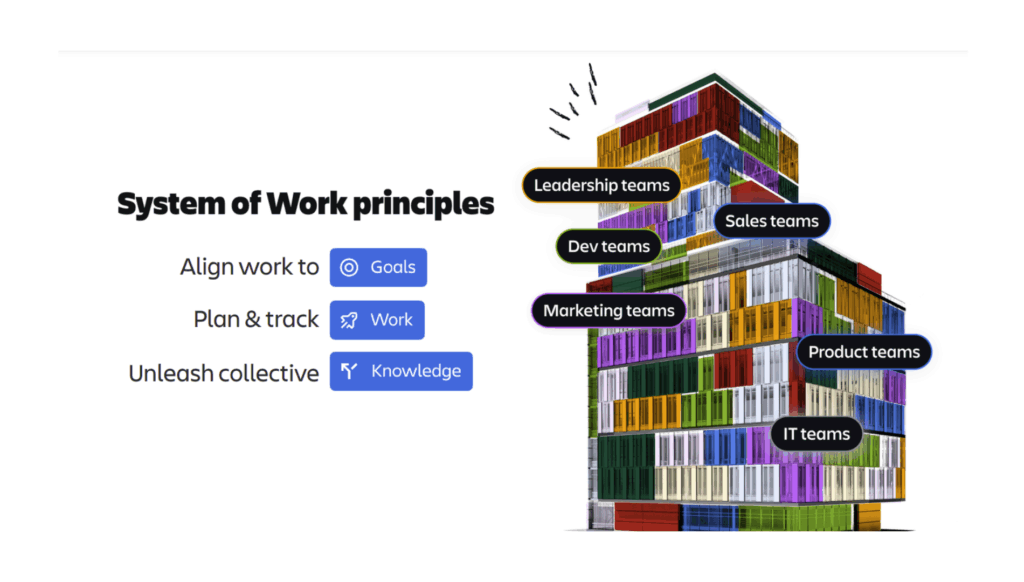
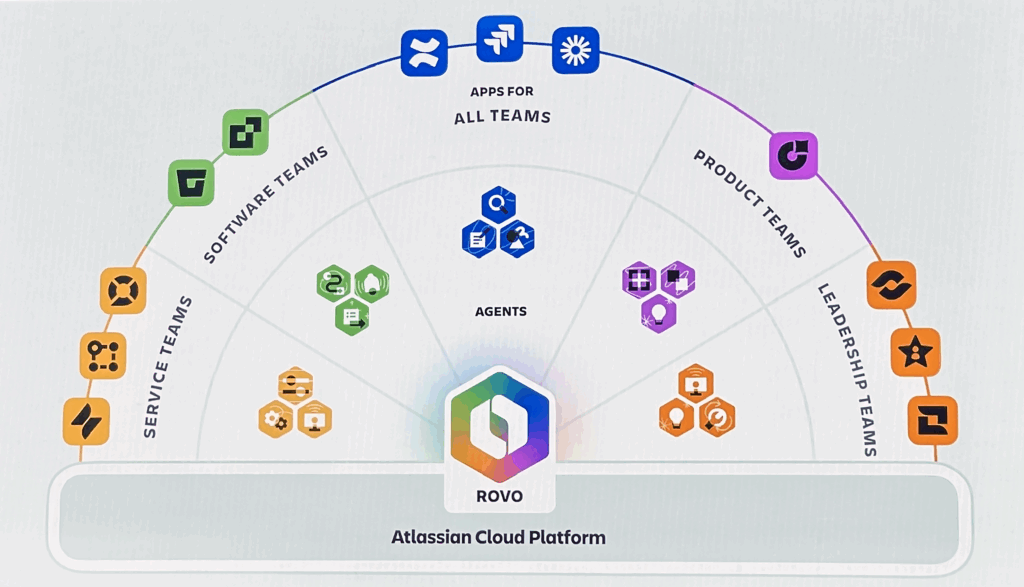
Atlassian System of Work

Why Traditional ITSM Models Are Falling Short

Legacy ITSM systems were designed for a different era—one where IT operated behind a ticket queue, isolated from the rest of the business. In today’s environment, that model creates several major problems:

  • Slow response times due to disconnected tools and manual workflows
  • Limited visibility across teams, making collaboration difficult
  • Fragmented knowledge hidden in silos, inaccessible when needed most
  • Reactive operations rather than proactive, value-driven service

Organizations that want to deliver high-velocity service—and stay competitive—need a better system.

How the Atlassian System of Work Modernizes ITSM

Atlassian’s System of Work is a connected philosophy powered by a tightly integrated platform. It transforms service management in three critical ways:
In this white paper, you’ll discover:

  • How partners like Oxalis bring it all to life through expert implementation, cloud migration, and change enablement
  • Why legacy ITSM and project tools no longer cut it for complex organizations
  • How Atlassian’s Teamwork Graph and Rovo AI supercharge collaboration and decision-making
  • Real-world strategies to unify project management, service delivery, and strategic planning

1. AI-Driven Service Management

With the Teamwork Graph and AI capabilities like Rovo, service teams now have access to intelligent, context-aware automation:

  • Virtual agents can resolve common issues automatically by referencing connected knowledge bases.
  • Smart routing directs tickets to the right team or person based on past trends and context.
  • Real-time summaries allow support teams to respond faster, with key information surfaced instantly.

Example: A service desk agent receives an incident report. Rovo automatically pulls in recent changes from Jira, highlights potential related issues, and recommends a resolution article from Confluence—all before the agent even clicks into the ticket.

The result? Faster resolution times, higher SLA adherence, and more satisfied customers and employees.

2. Cross-Team Collaboration, Built In

Modern service management is no longer just the responsibility of IT. Facilities, HR, Finance, and Security teams are all part of the service delivery ecosystem.

Atlassian’s System of Work makes cross-team collaboration seamless:

  • Jira Service Management allows non-technical teams to manage requests without heavy configuration.
  • Shared workspaces in Confluence and Jira mean incidents, changes, and problems can be tackled together—with full visibility.
  • Linked workflows ensure that escalations between development, security, and operations happen in real time.

Example: When a cybersecurity incident occurs, the service team logs it in Jira Service Management. Linked development and security teams are automatically pulled in through integrated workflows—reducing time to resolution and keeping all stakeholders aligned.

No more disjointed email chains. No more lost handoffs. Just integrated, streamlined service delivery.

3. Knowledge-Enabled Support

Knowledge is the fuel that powers high-velocity service management. But if knowledge is scattered, outdated, or hidden, it can’t drive value.

The System of Work ensures knowledge is:

  • Centralized in Confluence, linked directly to service tickets
  • Dynamic through live updates and crowd-sourced improvements
  • Accessible through intelligent search powered by the Teamwork Graph
  • Automated with AI suggesting relevant articles to agents and customers alike

Example: An employee submitting an IT ticket about VPN access immediately receives an AI-suggested knowledge base article explaining how to troubleshoot common VPN issues—often resolving the problem without ever escalating to IT.

Knowledge sharing doesn’t just make support faster—it turns service teams into enablers of self-service and empowerment.

What This Means for IT and the Business

Modernizing service management with the Atlassian System of Work delivers tangible, organization-wide benefits:

  • Reduced operational costs through automation and faster resolutions
  • Improved employee experiences with faster, smarter support
  • Higher service team morale as routine tasks are automated
  • Greater alignment between IT and business units
  • Data-driven insights into service trends, risk areas, and opportunities for improvement

In short, service management becomes less about reacting to problems—and more about strategically enabling the business to move faster and smarter.

How Oxalis Helps You Unlock High-Velocity Service Management

At Oxalis, we specialize in helping organizations—especially those in highly regulated and complex industries—modernize ITSM with the Atlassian System of Work.

We help our customers:

  • Migrate from legacy ITSM tools like ServiceNow and Cherwell to Jira Service Management
  • Implement cross-team service management practices that scale
  • Activate AI-driven service capabilities like Rovo agents
  • Design knowledge management systems that fuel smarter support
  • Train teams and drive adoption through change enablement strategies

Whether you’re starting fresh or evolving an existing service operation, Oxalis is your partner in delivering high-velocity, connected service management.

Ready to modernize your service management approach?

Contact Oxalis today and let’s build a smarter, more connected future together.
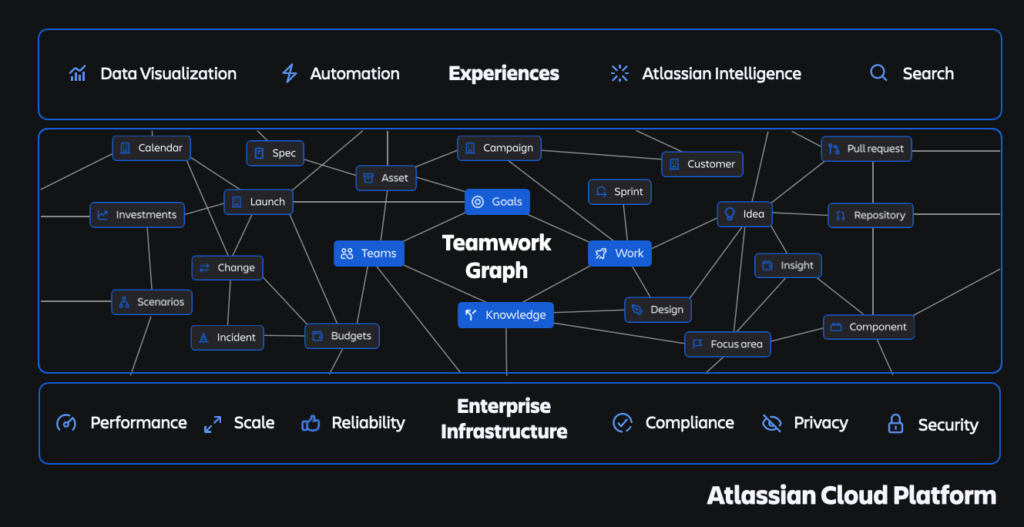
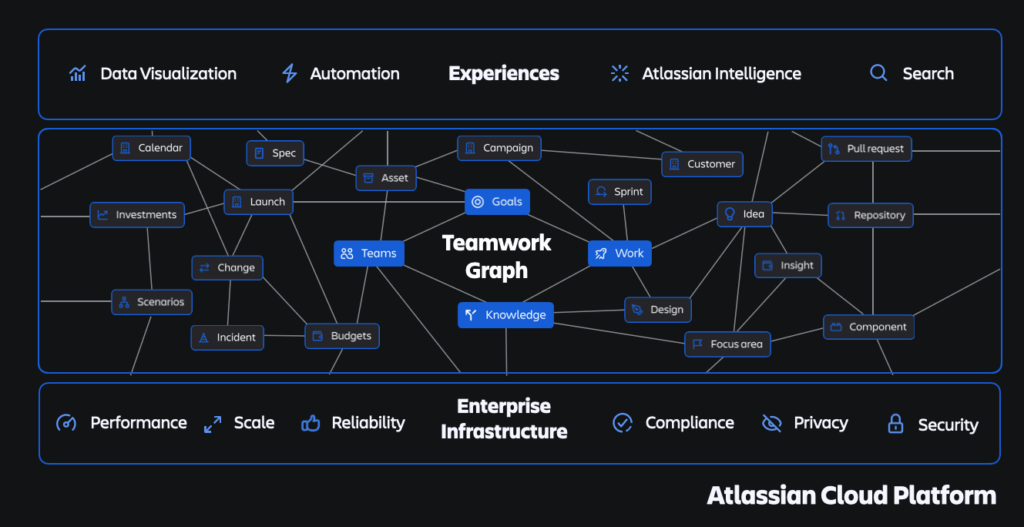
7 Powerful Ways Atlassian’s New Teamwork Graph Boosts Team Success

In today’s digital workplace, information overload and disconnected tools often stand in the way of true team success. But Atlassian’s latest innovation—the Teamwork Graph—is changing the game. Purpose-built to map relationships between people, work, goals, and knowledge, the Teamwork Graph is the foundation of Atlassian’s System of Work and the engine behind powerful new AI capabilities like Rovo.

So what does that mean for your teams?

Here are seven transformative ways the Teamwork Graph helps organizations boost productivity, collaboration, and business outcomes—starting today.

teamwork graph

1. Breaks Down Silos Across Teams and Tools

Siloed systems create bottlenecks and duplicate effort. The Teamwork Graph eliminates these pain points by stitching together work from tools like Jira, Confluence, Slack, and third-party apps—giving your teams a unified view of what’s happening, who’s involved, and where things stand.

Outcome: Seamless collaboration across departments, faster handoffs, and fewer miscommunications.

2. Powers AI-Driven Knowledge Discovery

Teams waste hours searching for documents, experts, and updates. With the Teamwork Graph, Atlassian’s AI can instantly surface relevant content based on what a user is working on, their role, and recent activities.

Example: A new hire can find all relevant onboarding resources across Jira and Confluence with a single query—no training required.

3. Delivers Context-Aware Automation with Rovo

Rovo, Atlassian’s new AI teammate, is deeply connected to the Teamwork Graph. That means it doesn’t just respond to commands—it understands relationships between tasks, teams, and timelines.

Rovo uses this context to:

  • Suggest ticket responses
  • Summarize updates and incidents
  • Recommend next steps
  • Route issues intelligently

Result: Smarter service management and less time spent on repetitive work.

4. Enables Personalized Workflows and Insights

Because the Teamwork Graph understands user context, it personalizes recommendations, dashboards, and action items. Whether you’re a project manager, engineer, or HR lead, Atlassian tools can now surface the work that matters most to you—without the noise.

Benefit: Better focus, fewer distractions, and faster decision-making.

5. Boosts Self-Service and Employee Empowerment

Through connected knowledge and AI-suggested content, the Teamwork Graph enables smarter self-service experiences.

  • Employees can solve problems on their own with dynamic, personalized articles.
  • Service desk agents get faster access to relevant documentation and resolution paths.

Impact: Reduced ticket volume, improved SLA performance, and empowered teams.

6. Connects Strategy to Execution

The Teamwork Graph maps how every task, epic, or request ladders up to broader goals. By linking goals to work items and contributors, leaders gain real-time visibility into progress, blockers, and alignment.

Example: A department head can instantly see how a delayed task in Jira might impact a strategic OKR—and course-correct early.

7. Unlocks Continuous Improvement Through Insights

By analyzing work patterns and relationships, the Teamwork Graph reveals trends, inefficiencies, and areas for optimization.

Use it to:

  • Track cross-team dependencies
  • Identify process slowdowns
  • Optimize workflows based on actual usage and outcomes

Why it matters: It transforms Atlassian from a set of tools into a living system of insight-driven improvement.

The Bottom Line: Why the Teamwork Graph Matters

The Teamwork Graph isn’t just a back-end feature—it’s the connective tissue that brings people, processes, and knowledge together. It turns your Atlassian tools into a true System of Work—adaptive, intelligent, and built for the way modern teams operate.

Whether you’re navigating service delivery, agile development, or enterprise transformation, the Teamwork Graph helps your teams move faster, collaborate smarter, and deliver better outcomes.

How Oxalis Helps You Activate the Teamwork Graph

At Oxalis, we help highly regulated organizations harness the full power of the Atlassian platform—including the Teamwork Graph and AI innovations like Rovo.

We specialize in:

  • Designing integrated, AI-ready workflows
  • Enabling smarter knowledge management
  • Driving adoption through training and change enablement
  • Migrating from legacy tools to the Atlassian Cloud
  • Building a connected System of Work that delivers lasting value

Let’s modernize the way your teams work—together.

Don’t miss these posts: 

Rovo from Atlassian: AI That Understands How Teams Really Work

For years, AI felt like something just over the horizon—an exciting concept, but not part of the everyday reality of how work got done. That’s changed.

Today, AI is moving from buzzword to trusted teammate—and nowhere is this transformation clearer than with Atlassian’s latest innovation: Rovo.

Built on the Atlassian Cloud Platform and powered by the Teamwork Graph, Rovo represents a major leap forward: a practical, powerful way to reduce friction, personalize experiences, and support knowledge workers across every corner of the enterprise.

Let’s take a closer look at what Rovo is, how it works, and what it means for organizations ready to rethink the way teams collaborate and deliver value.

What Is Rovo?

At its core, Rovo is Atlassian’s new AI-powered teammate designed to seamlessly assist across the Atlassian ecosystem—and beyond.

Rather than existing as a standalone chatbot or siloed tool, Rovo is embedded into the flow of work, proactively helping teams:

  • Find information faster across Jira, Confluence, Slack, third-party apps, and more
  • Summarize updates, decisions, and content in real time
  • Draft and recommend responses for tickets, documents, and updates
  • Surface relevant goals, projects, and people based on what users are working on
  • Automate routine tasks and information retrieval

Because Rovo is built on the Teamwork Graph, it understands the relationships between people, work, knowledge, and goals—meaning its suggestions are context-aware, relevant, and personalized.

This isn’t just AI “assistance”—it’s AI partnership.

How Rovo Reduces Friction and Empowers Teams

Every organization deals with friction: manual tasks, information silos, and duplicated effort that slow down progress. Rovo directly addresses these pain points by:

1. Accelerating Knowledge Discovery

  • Instantly finds the right documentation, project updates, or subject matter experts
  • Searches across all connected systems, not just within individual apps
  • Personalizes results based on a user’s role, team, and current work

Example: A new employee needs to find onboarding resources for a client project. Instead of navigating multiple platforms, Rovo surfaces the relevant Jira tickets, Confluence pages, and even Slack discussions—all in a single query.

2. Enhancing Personalization and Focus

  • Delivers tailored recommendations in Atlassian Home
  • Suggests next steps, recent updates, or related work items without requiring a manual search
  • Helps users stay aligned to goals and upcoming deadlines

Example: A project manager logs into Jira. Rovo highlights an upcoming deadline, shows related dependencies that might impact the timeline, and recommends a team member who can assist—all before the PM even clicks into the project dashboard.

3. Supporting Smarter Service and Operations

  • Assists service desk agents by suggesting knowledge base articles and resolution steps
  • Summarizes support tickets and escalations for faster handoffs
  • Automates low-level requests through virtual agents

Example: A support team using Jira Service Management sees a spike in password reset requests. Rovo automatically recommends a workflow to auto-respond with troubleshooting steps—saving time and improving SLA performance.

What Rovo Means for Your Organization

Integrating Rovo into your System of Work creates tangible, strategic advantages:

  • Faster response times and reduced time-to-resolution
  • More empowered employees who can self-serve information and resources
  • Increased productivity as manual busywork is automated
  • Better decision-making through smarter, context-aware recommendations
  • Higher employee satisfaction as teams spend more time on impactful, meaningful work

In short, Rovo helps turn information overload into focused action—and transforms AI from an abstract concept into a true member of the team.

How Oxalis Helps You Harness the Power of Rovo

At Oxalis, we believe that technology only unlocks its full potential when it’s thoughtfully integrated into people’s real workflows and needs.

When it comes to Rovo, we help organizations:

  • Configure Rovo agents tailored to their teams and priorities
  • Connect Rovo to both Atlassian tools and third-party platforms via the Teamwork Graph
  • Design knowledge management strategies that maximize AI assistance
  • Train employees to embrace AI as a trusted partner, not a disruption
  • Continuously optimize Rovo’s capabilities to drive long-term value

Whether you’re streamlining service management, scaling agile delivery, or building a knowledge-driven organization, Oxalis helps you put Rovo—and AI-powered collaboration—at the heart of your System of Work.

Ready to meet your newest teammate?

Contact Oxalis to learn how we can help your organization unlock the full potential of Rovo and the Atlassian System of Work.

Going Private: What Atlassian Isolated Cloud Means for Security-First Enterprises

At a Glance: What Atlassian Isolated Cloud Means for Secure Cloud Adoption

Atlassian Isolated Cloud is a single-tenant cloud deployment model built for organizations with elevated security, compliance, and data sovereignty needs. Launching in 2026, it offers complete tenant isolation, dedicated resources, and advanced governance—combining the control of Data Center with the agility of Atlassian Cloud. In this blog, Oxalis breaks down how Isolated Cloud compares to Government Cloud and Data Center, who it’s built for, and how highly regulated enterprises can modernize with confidence.

For highly regulated organizations, cloud adoption is no longer a question of if—it’s a question of how to do it securely, confidently, and without sacrificing control.

At Team ’25, Atlassian introduced a powerful new option to meet that challenge: Atlassian Isolated Cloud.

Set to launch in 2026, Isolated Cloud is designed for enterprises and public sector agencies that need all the innovation of Atlassian Cloud—but with the added assurance of complete tenant isolation, advanced customization, and increased governance.

At Oxalis, we’ve helped clients in defense, government, and critical infrastructure navigate the complexities of cloud modernization. Here’s what you need to know about Isolated Cloud, how it compares to other deployment models like Government Cloud and Data Center, and how to decide what’s right for your organization.

What is Atlassian Isolated Cloud?

Atlassian Isolated Cloud is a single-tenant cloud environment fully managed by Atlassian, designed for customers with heightened security, compliance, or data residency needs.

Key Features:

  • Complete tenant isolation: Your infrastructure is physically and logically separate from all other Atlassian customers.
  • Dedicated compute and storage resources: Eliminates shared resource concerns and reduces potential exposure risk.
  • Support for custom compliance requirements: Designed to accommodate industry-specific and national regulations not addressed by shared SaaS environments.
  • Advanced governance: More granular control over access, data handling, and system configurations.
  • Managed by Atlassian: You get the benefits of cloud—scalability, performance, uptime—without needing to manage the infrastructure yourself.

This model offers a compelling middle ground: the control of a private instance with the convenience of a cloud-native platform.

How Is Isolated Cloud Different from Government Cloud?

Both solutions are built with security and compliance in mind—but they serve different use cases.

FeatureGovernment CloudIsolated Cloud
Hosting EnvironmentU.S.-based, multi-tenantSingle-tenant, fully isolated
Compliance LevelFedRAMP Moderate (available); High & IL5 (planned)Supports advanced/custom compliance (including global needs)
Deployment TimelineEarly Access nowLaunching in 2026
Best ForU.S. federal agencies and contractorsAny enterprise requiring strict data sovereignty, full tenant isolation, or custom regulatory adherence

In Short:

  • Government Cloud is ideal for U.S. federal agencies.
  • Isolated Cloud is broader—it supports private sectordefense contractorsinternational agencies, and any organization with global compliance or segregation requirements.

How Is It Different from Data Center?

Atlassian Data Center has long been the go-to solution for customers requiring control, custom hosting, or on-prem deployments. So where does Isolated Cloud fit?

FeatureData CenterIsolated Cloud
Hosting ModelSelf-hosted or partner-hostedFully managed by Atlassian
Maintenance ResponsibilityCustomer or third partyAtlassian
ScalabilityManualElastic (cloud-native)
Innovation AccessSlowerImmediate
Security ControlsFull control, but self-managedStrong controls with cloud oversight
Use CaseOrganizations with strict on-prem mandates or no cloud accessOrganizations ready for cloud, but needing high isolation and control

Why Atlassian Isolated Cloud It Matters:

Isolated Cloud is ideal for organizations that want to modernize securely—moving away from legacy infrastructure while preserving strict control over their environment.

It also aligns with Atlassian’s long-term direction: as support for Data Center products winds down, Isolated Cloud offers a forward-looking, compliant cloud path.

Who Is Isolated Cloud For?

Isolated Cloud is designed for organizations where data sensitivity, sovereignty, or compliance is non-negotiable:

  • Defense and National Security Agencies
  • Aerospace and Maritime Contractors
  • Global Financial Institutions
  • Healthcare and Life Sciences
  • Critical Infrastructure Providers
  • SLED Agencies with State-Specific Hosting Requirements

If your teams are working in environments where “good enough” isn’t secure enough, Isolated Cloud offers the confidence and control you need—without losing the velocity of cloud innovation.

How Oxalis Can Help

At Oxalis, we specialize in helping complex, highly regulated organizations make smart transitions to the cloud.

Whether you’re considering Government Cloud, Isolated Cloud, or modernizing away from Data Center, we can support you every step of the way:

  • Cloud strategy and roadmap development
  • Security and compliance advisory
  • Migration planning and execution
  • Governance frameworks and access models
  • Change management and user adoption enablement

We’ve done this for organizations at every level—from state health departments to national defense contractors—and we’re ready to help you move forward with confidence.

Let’s Talk About What’s Right for You

Atlassian Isolated Cloud represents a major leap forward for cloud security and compliance—and we’re excited to help our clients explore what it makes possible.

Want to learn more or start planning your move?
Schedule a Discovery Session and let’s explore which Atlassian cloud option best fits your organization’s mission, risk profile, and goals.

True Collaboration, Real Results: Inside EDD’s Atlassian Cloud Transformation

What EDD Gained: Trust, Expertise, and a Scalable Future

The Challenge:

The California Employment Development Department (EDD) needed more than a technical solution—they needed a partner who understood the complexity of public sector operations. To realize their modernization goals, EDD sought a trusted advisor with deep Atlassian expertise, a clear roadmap for secure cloud migration, and a proven approach to change enablement.

Their goals were ambitious:

  • Improve agility and service responsiveness
  • Modernize IT project and knowledge management systems
  • Enhance collaboration and transparency across teams
  • Ensure scalability, security, and long-term sustainability

This vision marked the beginning of the EDD Atlassian Cloud transformation—a bold initiative to overhaul legacy platforms and empower workforce programs with modern, cloud-based tools.

The Oxalis Solution:

Oxalis assembled a multidisciplinary team of Atlassian-certified experts to lead EDD through every stage of the transformation. Our approach combined technical depth with a clear understanding of EDD’s business and operational needs.

  • Atlassian Cloud Migration: A secure, efficient transition to Atlassian Cloud ensured scalability and accessibility for a large, distributed workforce.
  • Jira Software and Confluence Implementation: We configured Jira Software to support agile project tracking across EDD teams and implemented Confluence as a collaborative knowledge base and documentation hub.
  • Custom Cloud-Based Solution Development: In addition to configuration, Oxalis developed a new solution built on Atlassian Cloud to meet EDD’s specific operational and reporting needs.
  • Change Management & Enablement: To support adoption, we provided strategic change enablement including user training, onboarding sessions, stakeholder communications, and scalable governance planning.
  • Ongoing Support & Optimization: Post-implementation, Oxalis continued to provide support and iterative enhancements to ensure continued alignment with EDD’s evolving priorities.

The Results:

The EDD Atlassian Cloud transformation delivered measurable results across the organization:

  • Increased efficiency and visibility in project management
  • Enhanced collaboration through centralized, shared documentation
  • Improved knowledge sharing and continuity across teams
  • Greater transparency and accountability for internal initiatives
  • A scalable foundation for future innovation


“Oxalis is not just a vendor; they are a true partner. Their commitment to client satisfaction, technical expertise, and collaborative approach makes them an invaluable asset. From planning through implementation and training, they delivered with precision, care, and a deep understanding of our needs.”
—  
Joseph Ledoux, EDDNext Project Administrator

The California Employment Development Department (EDD), one of the largest state departments in the United States, partnered with Oxalis to lead a comprehensive modernization initiative. This EDD Atlassian Cloud transformation involved migrating to Atlassian Cloud, implementing Jira Software and Confluence, and developing a custom solution tailored to enhance collaboration, transparency, and scalability across the organization.

Why It Worked

The success of the EDD Atlassian Cloud transformation wasn’t driven by tools alone—it was the result of a trusted partnership. Oxalis brought not only technical excellence but also the discipline of active listening, practical implementation, and long-term client enablement.

By aligning solutions with EDD’s real-world workflows and team structures, Oxalis delivered impact that extended far beyond go-live.

Looking Ahead

Today, EDD operates on a modern Atlassian Cloud environment that supports cross-team collaboration, improved project outcomes, and knowledge continuity. With Oxalis as a continuing partner, EDD is positioned to evolve and scale its systems with confidence.

Moving Forward with Atlassian Enterprise Transformation

Beyond Tools: Introducing the Atlassian System of Work for Enterprise Transformation

The role of IT leadership is evolving. CIOs, CTOs, and Directors of IT are no longer just stewards of infrastructure—they’re strategic partners guiding transformation, innovation, and business agility. But modern organizations are facing an all-too-familiar challenge: fragmented tools, siloed teams, and slow decision-making.

To meet this moment, Atlassian has introduced a new way of working—one that goes beyond the traditional approach to platforms and products. It’s called the System of Work, and it’s changing how leading organizations connect strategy to execution, streamline collaboration, and scale with clarity.

What Is the System of Work?

At its core, the Atlassian System of Work is a philosophy—not a product—that brings teams, goals, tools, and knowledge together in a unified digital environment. It’s designed for today’s connected enterprise, where business, IT, and software teams need to move fast and stay aligned.

Atlassian’s System of Work is built on four foundational principles:

  • Align work to goals – Connect day-to-day work to enterprise strategy.
  • Plan and track together – Break down silos between departments and coordinate with shared visibility.
  • Unleash knowledge – Make institutional knowledge accessible and searchable across the business.
  • Embrace AI as teammates – Use intelligent agents to reduce busywork and support decision-making.

This philosophy is fully embedded into Atlassian’s cloud platform and supported by an integrated suite of tools: Jira Software, Jira Service Management, Confluence, Jira Align, Atlas, and now Rovo—the AI-powered teammate.

What This Means for Businesses

For IT and business leaders, the System of Work represents a shift from tool-centric thinking to systems-level impact. Instead of managing a portfolio of disconnected software, the System of Work provides a cohesive, data-connected environment that mirrors the complexity and interdependence of modern enterprises.

Here’s why it matters:

  • Increased visibility: From high-level goals in Jira Align to work-in-progress in Jira Software and documentation in Confluence, everything is interconnected—reducing duplication and improving trust in status updates.
  • Faster execution: Real-time dashboards, automated updates, and cross-functional collaboration accelerate delivery.
  • Strategic agility: With the new Atlassian Focus platform, leadership can define OKRs, track progress, and adjust priorities dynamically.
  • Reduced overhead: AI tools like Rovo summarize meetings, draft reports, and surface relevant documentation—freeing teams to focus on high-value work.

A Day in the Life of the System of Work

Imagine this scenario in a complex enterprise environment:

  • A VP of IT defines quarterly strategic goals in Atlassian Focus—one objective is to modernize the organization’s customer support system.
  • The portfolio team breaks this goal down into epics in Jira Align, aligned with business value streams.
  • The software team plans sprints in Jira Software, linking stories to those strategic epics.
  • The IT service team uses Jira Service Management to capture feedback and support tickets, automatically connected to the development backlog.
  • Throughout the project, documentation is created and shared in Confluence, automatically linked to the related Jira issues.
  • The leadership team uses Atlas to get real-time updates and status without weekly check-ins.
  • And Rovo, Atlassian’s AI teammate, proactively answers stakeholder questions, suggests knowledge base articles, and summarizes team meetings into Jira tickets.

This is not a future-state—it’s happening today in organizations like Reddit, Procore, and Thumbtack. In one case, Procore reduced roadmap planning time by 75% using Rovo. In another, a virtual agent resolved 15% of IT requests without human intervention, improving SLA compliance across the board.

The Power of an Integrated Platform

The magic of the System of Work lies not just in the tools, but in how they work together:

  • Jira Software: Agile project management for software and business teams
  • Jira Service Management: ITSM with real-time collaboration and DevOps integration
  • Confluence: Centralized knowledge sharing and documentation
  • Jira Align: Strategic portfolio management and enterprise agility
  • Focus: Goal and OKR tracking for leadership visibility
  • Atlas: Contextual updates and team alignment
  • Rovo: AI-powered search, summarization, and workflow automation
  • Teamwork Graph: The data fabric that connects it all—people, work, knowledge, and goals

Enterprise teams can collaborate more effectively and achieve greater results together.

This white paper introduces the Atlassian System of Work, explains how it transforms organizational operations, and highlights why Oxalis is the ideal partner to help implement and succeed with this model.

Together, these tools form a single source of truth—a system that adapts to your business, scales across functions, and evolves as your teams do.

How Oxalis Can Help

At Oxalis, we specialize in helping organizations adopt and operationalize the Atlassian System of Work. We’ve guided complex, highly regulated enterprises—from shipyards and government agencies to healthcare and higher education—through successful transformation.

Here’s what sets us apart:

  • Strategic alignment: We design solutions that tie work to your top-level business goals.
  • Toolchain optimization: We connect your Atlassian tools into one coherent ecosystem.
  • Cloud migrations: We help you transition to Atlassian Cloud while ensuring performance, security, and compliance.
  • Training and change enablement: We work with your teams to ensure adoption and long-term success.
  • AI enablement: We implement Rovo and configure intelligent agents to support your teams from day one.

If you’re ready to unify your teams, reduce inefficiency, and move from reactive to strategic execution—Oxalis is here to help.

Let’s Build Your System of Work Together

Schedule a discovery session with our experts to learn how Oxalis can bring the Atlassian System of Work to life in your organization.

Don’t miss these posts:

From Silos to Systems: Inside the Big Announcements from Atlassian Team ’25

Discover how Atlassian is connecting teams, amplifying productivity, and bringing AI to the center of modern work.

Atlassian’s Team ’25 event in Anaheim set the tone for where modern work is headed—and the future is collaborative, connected, and powered by AI.

With a clear focus on helping organizations break down silos, amplify team productivity, and streamline strategic execution, Atlassian introduced a sweeping set of updates across its platform. From powerful AI capabilities and new product bundles to enhancements in cloud flexibility and customer service, this year’s announcements speak directly to the evolving needs of enterprises across industries.

Here’s a detailed look at what was announced—and what it means for your team.

Rovo: AI That Works Alongside Your Team

The biggest story from Team ’25 was the formal rollout of Atlassian Intelligence, now called Rovo—a smart AI teammate embedded directly into Jira, Confluence, and beyond.

Rovo is designed to help teams find information faster, automate manual work, and make more informed decisions using the context of your organization’s actual data. It includes:

  • Rovo Search & Chat: A conversational AI that can understand natural language and retrieve relevant information across Atlassian tools and over 50 third-party platforms (like Google Drive, Slack, Notion, and more). Think of it as a personal research assistant that always knows where your work lives—and how to get to it.
  • AI Agents: Prebuilt and customizable agents that can tackle specific tasks, such as:
    • Code Reviewer Agent for analyzing Bitbucket pull requests against requirements written in Jira.
    • Root Cause Analysis Agent that identifies the source of incidents using data from across your DevOps stack.
    • Workflow Builder Agent that creates complex Jira workflows from a simple prompt.
  • Rovo Studio: A low-code/no-code environment for creating your own AI agents, automations, dashboards, and custom data objects—essentially allowing you to build tailored AI workflows specific to your team’s unique needs.

And perhaps most impressively, Rovo is now included at no extra cost for customers on Premium and Enterprise Cloud plans, with Standard plan access to follow soon. That means world-class AI support—without a hefty price tag.

Teamwork Collection: Your Collaboration Hub, Reimagined

To further unify work across functions, Atlassian introduced the Teamwork Collection—a bundle of core Atlassian tools built to support seamless cross-functional collaboration:

  • Jira for managing tasks, projects, and initiatives.
  • Confluence for capturing knowledge and collaborative documentation.
  • Loom for async video communication and quick context-sharing.
  • Rovo AI Agents to tie it all together and reduce manual coordination.

The Teamwork Collection isn’t just a software bundle—it’s an intentional, integrated experience. With shared navigation, deep integrations, and AI features that cut across tools, teams can collaborate more effectively, whether they’re in marketing, engineering, operations, or support.

Need to spin up a new team? The collection makes it simple to create a dedicated Jira project, a Confluence space, a Loom channel, and Slack integration—all in one click. And with Rovo helping connect dots behind the scenes, silos start to disappear.

Strategy Collection: From Vision to Execution

While the Teamwork Collection empowers collaboration at the team level, the Strategy Collection is built for executive leadership and enterprise portfolio planning.

This new solution brings together:

  • Focus: A strategic planning hub where executives define goals, set OKRs, and track progress in real-time. Work from Jira or Jira Align rolls up automatically, creating a live view of how strategy translates into action.
  • Talent (Early Access): A new workforce planning tool that allows leaders to model roles, skills, and team capacity across initiatives. Talent helps identify resourcing gaps early—so you’re never understaffed on your most important priorities.
  • Jira Align: A powerful enterprise agile planning tool that connects strategy to delivery across large, complex teams. It ensures alignment from top-level initiatives down to sprint-level tasks.

Together, these tools offer something many leadership teams struggle to achieve: clear visibility into goals, work, people, and progress—all in one place.

Customer Service Management: AI-Powered Support That’s Actually Connected

Customer-facing support teams often sit far from the product and engineering teams they rely on to resolve issues. Atlassian’s new Customer Service Management (CSM) app, now in beta, is built to close that gap.

The CSM app:

  • Connects support tickets to the broader Atlassian platform—pulling in relevant Jira issues, Confluence articles, incidents, change logs, and more.
  • Features an AI support agent that can resolve common issues, summarize requests, and even suggest draft replies for support reps.
  • Provides a unified view of context: related deployments, known issues, and affected services are surfaced automatically.

By integrating support into the same system as development and IT, teams resolve issues faster, reduce handoff delays, and keep customers informed every step of the way.

New Cloud Deployment Options: Flexibility for Regulated Teams

One of the most important announcements for regulated industries came in the form of two new deployment options:

  • Atlassian Government Cloud: Now in Early Access, this U.S.-based environment is FedRAMP Moderate authorized, allowing federal agencies and contractors to use Atlassian Cloud products in a compliant and secure way. Support for FedRAMP High and DoD IL5 is on the roadmap.
  • Atlassian Isolated Cloud: Launching in 2026, this will offer a single-tenant, Atlassian-managed cloud environment for customers with the highest levels of security and data separation requirements—such as finance, defense, and healthcare organizations.

These offerings provide the flexibility enterprises need to move confidently to the cloud—without compromising on control, security, or compliance.

Enhanced User Experience Across the Platform

Alongside the major launches, Atlassian also introduced thoughtful enhancements that improve the day-to-day experience of every user:

  • Refreshed Navigation & Design: A consistent, modern UI across Jira, Confluence, and more makes it easier to navigate, collaborate, and focus—especially for users working across multiple Atlassian tools.
  • Trello Updates: Trello is getting smarter and more streamlined for personal productivity. New features make it easier to capture tasks on the go (via Slack, email, mobile), manage workloads, and automate recurring steps—transforming Trello into a true daily work dashboard.
  • Expanded Integrations: Atlassian deepened its integrations with Slack, Microsoft Teams, Google Workspace, and others, helping users work where they’re most comfortable while keeping all data connected and accessible.
  • Custom Domains: Available for Jira and Confluence Cloud, this long-awaited feature lets organizations host their Atlassian instances at their own branded domain—for example, jira.mycompany.com—enhancing both security and user trust.

What does this mean for Oxalis customers and our broader community?

Atlassian’s vision is becoming increasingly clear: one connected platform for all teams—augmented by AI, tailored for enterprise, and flexible enough to meet the needs of the most complex organizations.

  • AI isn’t a future concept—it’s here today, embedded where your teams work, and designed to eliminate the friction of searching, documenting, coding, and responding.
  • Collaboration is simpler and more seamless—whether you’re a DevOps engineer, a product owner, or a program manager leading multi-team initiatives.
  • Strategic planning is no longer locked in slide decks—it’s dynamic, actionable, and connected to real-time execution data.
  • Support and service teams are empowered, not siloed—thanks to a smarter, more connected approach to resolving customer issues.
  • You don’t need to choose between compliance and innovation—you can have both, with deployment options that meet your regulatory needs without holding back your teams.

At Oxalis, we’re excited about what these updates unlock for our customers across government, healthcare, maritime, and beyond. If you’re curious about how to put these new tools to work—or need a partner to help chart your path—we’re always here to help.

Atlassian Just Made Rovo Available to Everyone—Here’s Why It Matters

At Team ’25, Atlassian didn’t just introduce new features—they signaled a turning point in how we work. With the announcement that Rovo is now available to all customers, the path to AI-powered collaboration just became clearer, more accessible, and more impactful.

This isn’t about future-state technology. It’s about real tools teams can use right now to transform how they plan, deliver, support, and scale their work.

The Big News: Rovo Is Now for Everyone

Rovo, Atlassian’s enterprise AI teammate, is now available to all customers—bringing advanced search, chat, and automation into the daily workflows of Jira, Confluence, and Jira Service Management users. Until now, Rovo was reserved for early adopters and high-scale enterprises. Today, it’s part of the core offering, and the timing couldn’t be better.

With over a million users already leveraging Atlassian’s AI features each month, this expansion puts powerful, context-aware AI within reach for every team—whether you’re building software, managing projects, or operating in a high-compliance environment.

Introducing Rovo Studio: Build Agents, Workflows, and More—No Code Required

One of the most exciting additions is Rovo Studio: a new, unified environment where teams can build custom agents, design workflows, automate tasks, and create reusable assets—with or without writing code. For Oxalis clients in highly regulated industries, this low-code/no-code functionality is a game-changer.

Now, IT leaders can:

  • Rapidly build AI-powered automations without heavy dev resources
  • Configure agents with security and compliance in mind
  • Adapt quickly to evolving internal processes and policies

Smart Agents, Powered by the Teamwork Graph

At the heart of Rovo’s new capabilities is the Teamwork Graph—a dynamic knowledge model that connects people, work, and context across your Atlassian ecosystem. Rovo uses it to deliver relevant, real-time insights and actions.

New Rovo agents launched at Team ’25 include:

  • Brainstorm Facilitator – An AI-powered ideation tool that works directly in Confluence whiteboards. It analyzes data from Jira, Confluence, and past team inputs to suggest new ideas, refine plans, and transform discussions into tangible next steps. The result? Faster planning, more creative solutions, and a collaborative process that doesn’t stall out.
  • Diagram Creator – Converts complex conversations into clear, structured visuals using Confluence whiteboards. Whether you’re mapping a system architecture, illustrating a workflow, or capturing a planning session, this agent quickly creates diagrams that align with your data and context—helping teams visualize ideas without losing momentum.
  • Workflow Builder – Allows users to build customized Jira workflows using natural language. By interpreting team goals and translating them into real, functional workflows, this agent helps streamline processes, reduce configuration overhead, and empower teams to evolve their operations—without technical blockers.

What This Means for Oxalis Customers

At Oxalis, we’ve long championed Atlassian’s vision for integrated, intelligent teamwork—and Rovo delivers on that vision in ways that directly benefit our clients:

  • For regulated organizations: You now have access to AI tools that respect permissions, auditability, and governance models.
  • For overburdened teams: Rovo helps reduce context switching, automate manual tasks, and surface key knowledge instantly.
  • For innovation leaders: You can accelerate transformation without introducing risk.

We’re already working with customers to implement Rovo agents tailored to ITSM workflows, agile portfolio management, onboarding, documentation, and more.

The Real Business Value of Rovo

AI doesn’t replace people—it multiplies their ability to do meaningful work. With Rovo, organizations can:

  • Cut time spent searching for information by up to 50%
  • Reduce manual effort across operations, engineering, and support teams
  • Improve team alignment with AI-curated insights and historical context

And with Studio, your organization can build AI into its DNA—without waiting on developer resources or lengthy change cycles.

How Oxalis Can Help You Get Started

As an Atlassian Platinum Solution Partner specializing in Cloud, ITSM, and Enterprise Strategy & Planning, Oxalis is uniquely positioned to guide you through Rovo adoption.

We’ll help you:

  • Evaluate where Rovo fits in your current environment
  • Design secure and scalable agents for your workflows
  • Train your team to use Rovo effectively and responsibly
  • Measure impact, iterate quickly, and plan for the future

Let’s Build the Future of Teamwork

Atlassian is making it clear: AI isn’t a side tool—it’s the next layer of teamwork. And now, it’s available to every organization.

If you’re ready to explore what Rovo can unlock for your teams, we’re ready to help you make it real.

Let’s talk about your next step toward AI-enabled collaboration.

Don’t miss these posts:

Strategy, Meet Execution: Oxalis Earns Atlassian Enterprise Strategy & Planning Specialization

We’re thrilled to share some exciting news from the floor of Atlassian Team ’25: Oxalis has officially earned the Enterprise Strategy & Planning specialization (formerly known as Agile-at-Scale). This distinction recognizes our deep expertise in guiding complex organizations through large-scale Agile transformations—and we’re honored to be among the select partners entrusted with this designation.

We’re incredibly grateful to the Atlassian team for their partnership, trust, and continued investment in the Solutions Partner ecosystem. Being part of this community means more than just delivering solutions—it means helping customers unlock real, lasting change.

What the Specialization Means

To earn this specialization, partners must demonstrate real-world experience and proven outcomes in helping organizations scale agile practices using frameworks like SAFe, LeSS, Disciplined Agile, and more. It reflects not only our technical proficiency with tools like Jira Align and Jira Software, but also our broader capabilities in:

  • Advising on agile architecture and enterprise tooling
  • Aligning teams, leadership, and organizational goals
  • Accelerating delivery and improving predictability
  • Driving cultural change and agile adoption across the enterprise

This specialization is about more than process. It’s about strategy, leadership, and transformation.

Our Approach: Practical, People-Centered, and Proven

At Oxalis, we understand that no two organizations are alike. That’s why we don’t take a one-size-fits-all approach to agile at scale. We help our clients design and evolve the right framework for their unique context—whether that’s SAFe with Jira Align, a custom hybrid, or something in between. Our work is grounded in practical experience and guided by measurable outcomes.

From the California Department of Health Care Services (DHCS) to ARPA-H and the Gates Foundation, we’ve helped large, complex teams move from siloed efforts to enterprise-wide visibility and agility. We build long-term partnerships, provide coaching and training, and guide our clients every step of the way—from initial roadmap to steady-state optimization.

A Shared Vision with Atlassian

This milestone reflects the synergy between Oxalis and Atlassian’s vision for the future of work. As teams navigate increasing complexity, tighter timelines, and higher expectations, we believe enterprise agility is no longer optional—it’s essential. Atlassian’s suite of tools, including Jira Align, provides the foundation. Oxalis helps make it real.

We’re proud to stand alongside Atlassian at Team ’25, celebrating the innovation, passion, and momentum that this community brings to every challenge.

To our clients, our partners, and the Atlassian team—thank you. We’re just getting started.

Let’s continue building better ways of working, together.

Ready to achieve your Agile at Scale transformation?