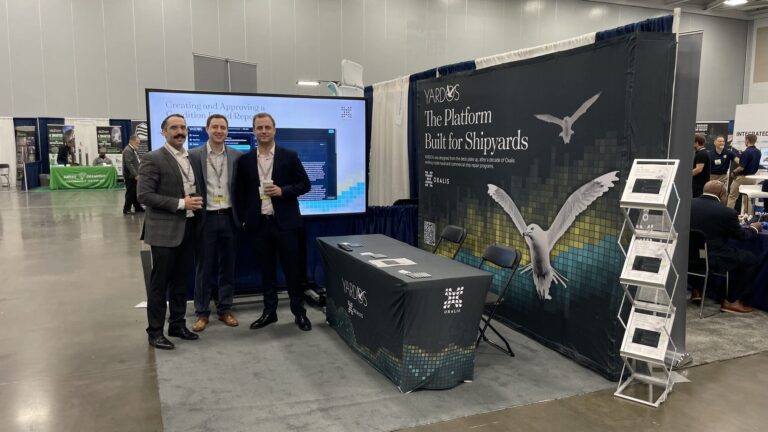
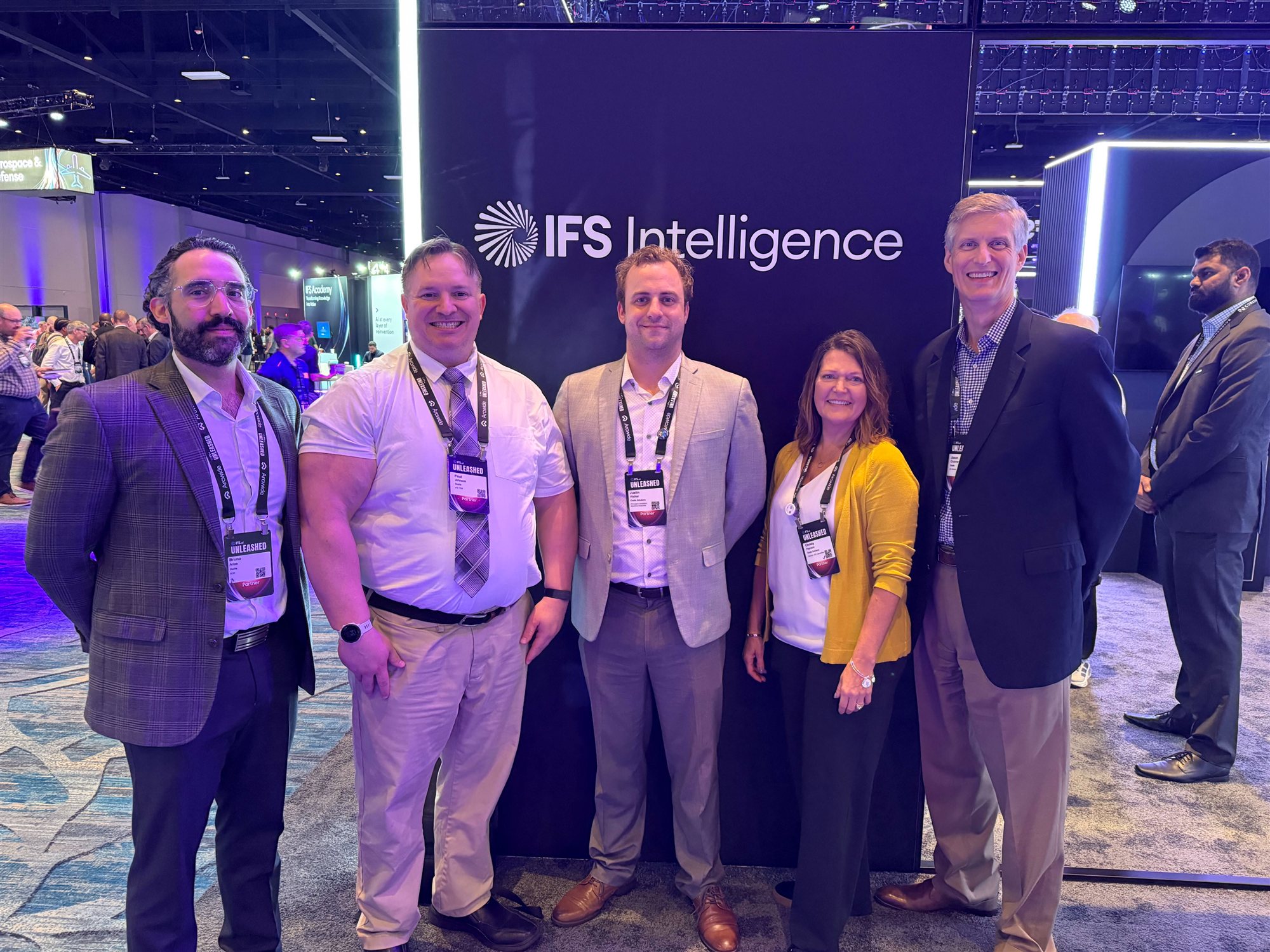
IFS Intelligence had Orlando buzzing. After the keynotes, conversations turned to data, governance, and the people who will use it.
At a glance. Oxalis spent two days on the expo floor at IFS Unleashed 2026 in Orlando. IFS Intelligence led the keynotes and most of the conversations around them. The questions A&D and maritime operators brought to our booth centered on what it takes to make AI work inside a regulated operation.
IFS Unleashed 2026 brought IFS customers, partners, and product teams to Orlando in October. IFS Intelligence, the ERP’s AI layer, and its roadmap were the center of most sessions and floor conversations. Oxalis exhibited in the aerospace and defense section, where much of the talk was about maintenance, repair and overhaul (MRO) in regulated environments.
Five questions operators asked about AI
The same questions came up from breakouts to our booth across both days.
- Where do we start, and which use cases come first?
- What is available now, and what is still on the roadmap?
- Can we trust what Intelligence recommends, and who approves the final actions?
- Will this work with the systems and data we already run?
- What will implementation demand from our team, and how do we measure success?
Read together, these are implementation questions. Each one asks how an operation can adopt AI confidently, with tangible results, on its own data, under its own approval chain, and with its own people.
AI is moving from the back office to the deck plate
Much of the early AI conversation focused on the back office with bots taking on data entry, analysis, and reconciliation. Exceptions to rules get flagged, and the finance, planning, and supply chain teams who used to chase mismatched numbers get that time back.
One breakout showed mobile tools designed for the field, where a technician on a deck plate or flight line used a tablet to voice-transcribe their finding, take a photo and move on to the next job. In the demo, a form that typically took 20-30 minutes to complete was done in about three. This puts material time back into the repairs and ensures the record is made while the technician has the details in front of them.
For aerospace, defense, and maritime, the value goes beyond saved time. Supervisors, project managers, and craftspeople rarely sit behind a keyboard, so when their systems follow them into the field, they can capture findings as the work happens. As a result, the organization builds a more comprehensive record it can learn from and share with the next person on the job.
That matters now because of who is doing the work today and how their knowledge gets transferred tomorrow. An A&D workforce panel with BAE Systems, HII, PwC, and IFS described experienced people retiring, a large share of the work still running on paper, and what those people know leaving with them. The window to capture that knowledge is closing, which puts a premium on tools technicians will actually adopt.
Where AI programs slow down in regulated operations
The concerns we heard most were around data readiness, integration, security, accountability, and adoption. Beneath them sat a practical worry about piling on another process adoption or workflow transition on top of teams that are already stretched thin.
Regulated operations add a constraint of their own. Across aerospace, defense, and maritime, regulation has not kept pace with what the technology can do, so an AI-driven workflow has to show who approved what, on which data, and when. Traceability and auditability determine what can go live, which is why human-in-the-loop review belongs in the design from day one.
Adoption is where many programs stall, because they threaten to slow the workforce down. A tool that encumbers the person doing the repair will get set aside.
The programs that will move fastest plan for how and where people will use the system as carefully as they plan for how the data will flow.
And timelines are getting tighter. The customers we spoke with said an 18- to 24-month implementation no longer fits their needs, and they now expect value inside the first year, with AI shortening the data migration and mapping work that used to fill the early months.
Start with the bottleneck, not the bot
One breakout particularly resonated with our team. While describing their move from paper to digital systems, a presenter from PNM Group summed it up with, “start with the bottleneck, not the bot.”
Applied to an AI use case, that comes down to four steps.
- Name the workflow where time is lost and estimate the hours it costs.
- Assess the system of record underneath it, and whether its data is clean enough to trust.
- Decide who approves the outputs and how that approval is recorded.
- Select the measurement parameters and metrics before the work starts, so the crew is clear on what success looks like and when they can expect to achieve it.
That sequence gives your first project a defined scope, while also building the human review and approval process the next use case will need.
Path vs. promise. How Oxalis approaches IFS implementation in A&D and maritime.
Most attendees left Orlando sold on the promise of IFS Intelligence. Our team walked away resolute that the path will determine the outcomes. That means it’s critical to scope change management, data preparation, and an implementation led by people who know how a shipyard or a hangar runs.
This is where specialists earn their place, and it is the work Oxalis does every day in the compliance-heavy world of aerospace, defense, and maritime. Our approach follows a simple rule: leaders go to where the friction is.
For Oxalis, that means starting each engagement at the bottlenecks. We look at where work stalls, data breaks down, or approvals pile up, and focus on finding your first relief there. We work iteratively and focus on value-first, so customers see results early, which is the pace they told us they now expect.
If you are scoping a first IFS Intelligence use case, we can run a discovery session with your team to find the friction worth fixing first.
Get in touch with our IFS Specialized Partner team today.