From 10 Hours A Week To 10 Years Later
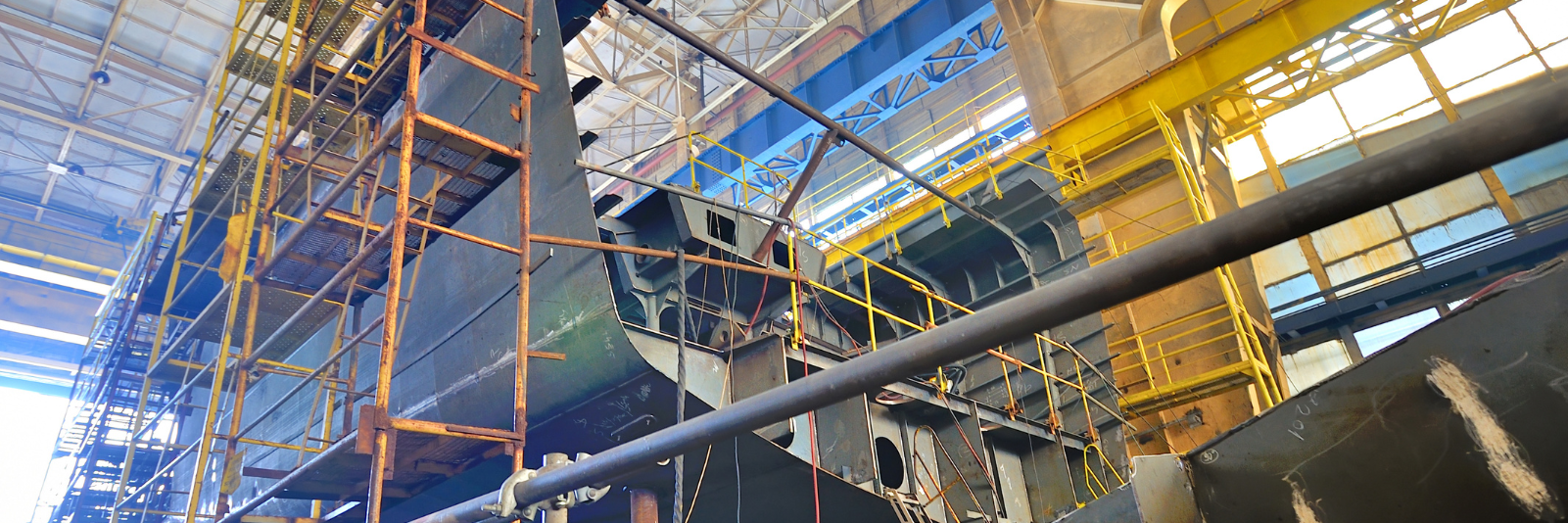
A ship hull under construction inside a shipyard fabrication hall

THE NEXT 10

Emy Daly Signed On for Ten Hours a Week. Ten Years Later, She’s De Facto Employee One.

Part of The Next 10. Ten years of building what didn’t exist.

In early 2016, before Oxalis officially existed, Jon Malanche called Emy Daly about a project at a Pacific Northwest shipyard. Having just had a baby, she turned him down.

“Two months later, he called me again,” she says. “Asking can you do it now?”

The project had security requirements that limited who could touch the servers, and Emy, with a telecom background and years of server administration behind her, was one of the few people Jon knew who could.

She started with 10 hours a week installing servers, upgrading software, and whatever needed doing in between, a handful of hours at a time.

The form nobody would build

The shipyard had spent a long time trying to get someone to build a system for its condition found reports, the CFRs a repair yard generates when workers open up a vessel and find work beyond the original scope. Every vendor who looked at the problem treated it as a ground-up software build, so every quote came back with big numbers and long timelines no one had.

Oxalis had a different read.

“Jon looked at it all and saw a service management problem,” Emy says. “Because all it really was, is a workflow and forms. Information on a form, going through various approvals and statuses.”

The team surveyed the service management tools already on the market. Most carried a cloud component the yard’s security requirements ruled out, so they landed on Jira, which could run entirely on the yard’s own servers.

“Two months later, we had a working project for them,” Emy adds. “For this thing that other people were saying was going to take forever and cost all this money.”

That build became OSRS, the ship repair system Oxalis still runs for shipyard customers today. Emy built it from day one and still maintains it.

Training day at the yard

The people using this system were not your hands-on-keyboard office workers.

“These are craftsmen who work with their hands. They weren’t logging into websites to do their work,” Emy recalls.

The first on-site training put her and Jon in front of roughly 30 welders and painters, and the session had to meet the users where they were.

“We literally had to start from, here’s how you log in. Here’s how you get to a webpage.”

Ten years later, that is still how she describes the firm’s support ethos.

“They come to us with a problem… and we’re about solving. Let’s fix whatever it is and make it easier. We’ve never been the, oh, this is too hard type. It’s never that.”

Trusted from both ends of the system

One of the first things OSRS automated was submitting repair records straight to the Navy’s maintenance database, work a team of administrators once did by retyping everything into a web interface by hand. The first successful streamlined submission is still a moment Emy lights up over.

“That was really cool.”

The long-term wins are a slower burn. The database operators sit outside the Oxalis customer list entirely, and over the years they began reaching out to Emy directly, asking her to help a shipyard on their end resolve a submission issue. When one of them left her role, she sent Emy an email saying the whole process had improved with Oxalis in the middle, because for the first time both sides had somebody invested and technical to call.

“It eases a lot of the frustrations in the process for everyone involved,” Emy says. “And it feels good when you can help and you’re trusted on both sides.”

Building for the next ten

Emy still runs the platform she started building in 2016. Though the bones are the same, she’s navigated evolving the process as both Jira and technologies have advanced.

“The Jira platform is my baby,” she adds.

And as Oxalis invests in the next ten years of its work in the yard, the team that made the first answer is shaping what comes next.

“We’re the experts now,” she says. “So we get to identify and build what’s missing.”

What keeps her in the maritime corner of the firm is what the work moves forward. For her, it’s the tangible result of a ship getting repaired and put back in service at the end of the day.

Ten years in, she describes the customers she supports the way most people describe coworkers.

“These are my releases. These are my people.”

The firm has grown to the point where there are colleagues she hasn’t met in person yet. She keeps track of them anyway, the one who hears somebody is moving to South Carolina and knows which Oxalis person already lives there. She has her own name for that role.

“I want to be the auntie of Oxalis.”

And she is. Join our next ten. → Careers at Oxalis
 

He Gave Himself a Year. That Was Eight Years Ago.

Part of The Next 10. Ten years of building what didn’t exist.

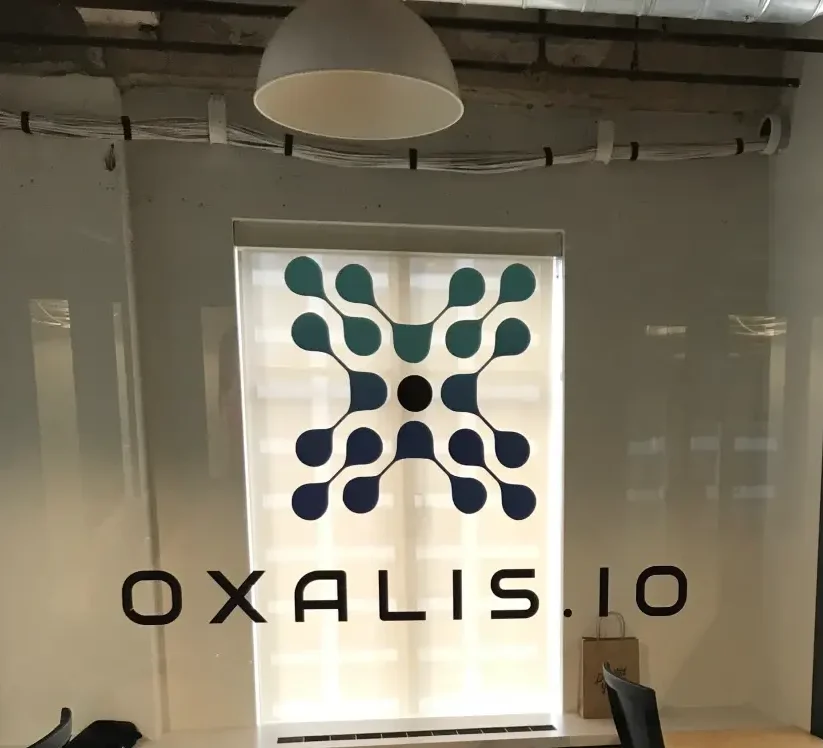
An early Oxalis office, company logo on the glass wall
An early Oxalis office with the original company logo on the glass door.

Ten minutes into the first training session he ever led, Brody Larson learned the most important lesson of his consulting career.

The room was a shipyard conference room, filled with trades supervisors, the people who run the welders, the painters, the boilermakers. Jon had handed him the session that morning. So there he was at the front of the room, laptop plugged into the projector, walking through the basics. Open the browser. Go to this URL. Here’s how you log in.

Then he said it. “If you right-click here, you can open this in a new tab.”

A hand went up in the back. The first question of the day.

“Hey, what do you mean, right-click?”

Brody walked over and pointed at the mouse. “There are, in fact, two buttons. The left one clicks things. The right one gives you some options.”

The supervisor got it immediately. New level unlocked. And Brody got something too. These are people who spend their days on the ship doing what he calls “real work,” or working with their hands, not at a keyboard. If the software was going to matter to them, it had to meet them exactly where they were.

Then and there he learned to slow down, assume nothing and build for the people actually doing the work.

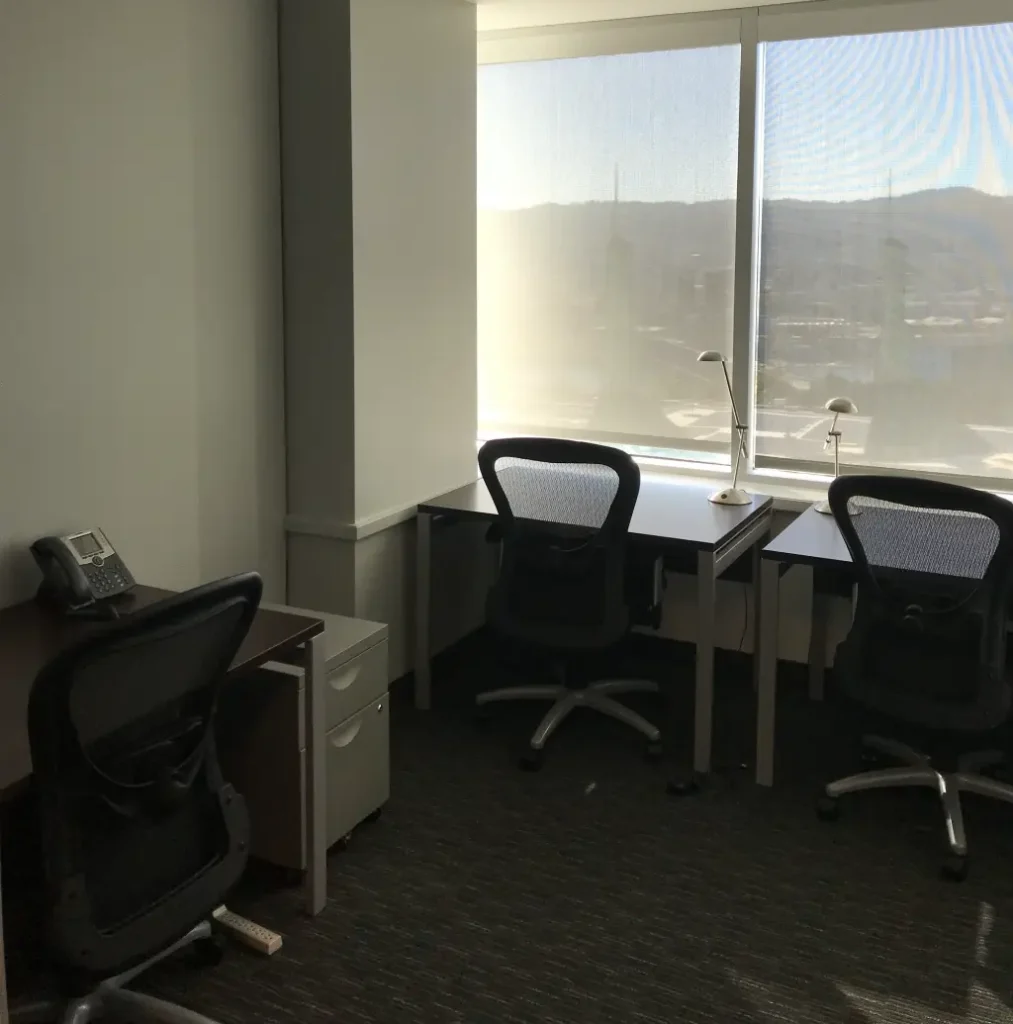
The original three-desk Oxalis office, with a view over the city
The original three-desk Oxalis office, with a view over the city.

Three desks and a short-term plan

When Brody walked into Oxalis for the first time, the whole company fit in a three-desk office. (A three-desk office with a great view, he’ll have you know.) There were one, maybe two customers at that point. Nobody was a full-time employee yet. Everyone, founder included, was a contractor.

Brody was an intern who, by his own admission, didn’t fully know what technology consulting was. That first summer he did everything. Website redesign, branding work, cold-calling prospects, and tagging along to a longtime shipyard client in the Pacific Northwest, ten minutes from where he lived, to take notes and do whatever Jon told him to.

The plan was simple. Intern under Jon for a few months, maybe a year, learn how business gets done, and then go apply at one of the big consulting firms.

“I never did,” he says. “So, here I am.”

Why a year became eight

Today Brody is a principal consultant with five consultants reporting to him. He leads most of the firm’s first engagements with new customers, the small, prove-yourself projects that decide whether a new client becomes a long-term one. He calls that role being Oxalis’s foot in the door, and he means it as a point of pride.

When candidates he’s interviewing flip the question around and ask why he’s still there, he gives them the same answer every time. At Oxalis, you build the business while doing the work. In a single day he might be running client projects, mentoring his team, interviewing new hires, and improving the internal systems that make the next stage of growth possible.

“I have grown as the company has grown,” he says. Some days that’s chaotic. Most days it’s the reason he stayed.

The moments that proved it

Ask Brody for the win that stuck with him, and he doesn’t reach for a revenue number. He tells you about a leader at that longtime shipyard client who changed companies and brought Oxalis with her. New role, new industry, reputation on the line, and her first move was to call the firm she trusted.

“We proved ourselves in her mind,” Brody says. “She was going to bring us along with her.”

Then there was the day a second shipyard went live on OSRS, the system Oxalis originally built because nothing on the market could do what that client needed. Watching another yard adopt it, integrated with the Navy’s own database, was the moment a one-client solution became a product. That product line has since been rebuilt smarter twice over, and today it’s called YARDOS.

And behind those wins, what Brody thinks people outside the firm don’t get to see, is leadership that never left the work. “Many times I have seen Jon hear or sense that a project wasn’t on track,” he says, “and just step in to help fix it. Not all leaders are willing or able to do that. He’s both.”

The next ten

Oxalis hit 50 employees this year, a threshold that still surprises the guy who joined a three-desk office. He works daily with teammates in Guadalajara that he calls some of the best he’s had. The firm’s partnerships keep opening new doors, and YARDOS is taking Oxalis back to the shipyard customers he’s missed since his early years.

His focus for the decade ahead sounds exactly like him. Build the systems that help the next 50 people ramp up faster than he did, so a company that learned by doing can keep doing it at scale.

Ten years in, Oxalis is still hiring the way it hired Brody, and looking for people who want to build the company while doing the work.

Join our next ten. → Careers at Oxalis
 

Want a More Resilient Business? Tell Your Best People to Take a Break

At a Glance: What’s the business case for offering sabbaticals in consulting?

Oxalis’s “3 for 3” sabbatical program gives employees three fully paid weeks off after three years of service—with a full disconnect required. It’s helping prevent burnout, build resilience, reduce key-person risk, and shift the firm’s focus from hours worked to impact delivered.

As the CEO and founder of Oxalis, I know how intense our work can be. Consulting moves fast, the problems are complex, and people care—sometimes too much for their own good. Early on, I saw the signs of burnout in high performers, even those who genuinely love what they do. So we asked ourselves a simple question: what would it look like to give people real time to rest?

That question led us to create something we now call the “3 for 3” sabbatical program. The idea is simple: if you’ve been with us for three years full-time, you get three continuous, fully paid weeks off. You can add a week of PTO and turn it into a full month. But there are two non-negotiables: it has to be taken all at once, and you have to completely unplug—no emails, no Slack, no “quick questions.”

Why We Did It

The original goal was preventing burnout. Consulting firms, especially in the early years, often see high turnover around the 2–3 year mark. Some of that’s just career progression, but a lot of it comes down to exhaustion. The people who burn out are usually the ones who care the most—who push hard and rarely take a step back.

At Oxalis, our people are the business. If they’re burned out, the business suffers. If they’re rested and focused, we thrive. So we built a sabbatical program not as a perk, but as a tool to protect the long-term health of our team—and by extension, our company.

The Reality of Implementing It

Let’s be honest: implementing this in a consulting firm isn’t easy. The economics of professional services revolve around billable hours, utilization, and margin. Most firms talk about work-life balance, but everything in their model pushes the other way.

Even standard PTO can feel hard to take in this environment—so asking someone to take a month off? That’s a big ask. And not just from a planning standpoint—people don’t always want to disconnect. High performers often feel too responsible to step away. They worry things will fall apart, or that it sends the wrong message.

That’s why leadership has to set the tone. At Oxalis, we celebrate sabbaticals during team meetings. We encourage people to share what they did, what they learned, or how they spent their time. And we model it ourselves. If leaders don’t unplug, no one else will feel like they can.

“If your company can’t run without one person, that’s a risk. Sabbaticals help expose—and fix—that risk.”

What We’ve Gained

The benefits have gone far beyond burnout prevention. Here’s what we’ve seen so far:

1. Better Resilience and Scalability
When a key person steps away, the team adjusts. Gaps get revealed. Documentation gets updated. Knowledge gets shared. The business gets stronger because we’re not over-relying on any one individual.

If your company can’t run without one person, that’s a risk. Sabbaticals help expose and fix that risk.

2. A Shift in How We Measure Value
In traditional consulting, hours are currency. But we’re moving toward a model based on impact and outcomes. When you encourage people to take real time off, you’re also saying: what matters isn’t how many hours you logged—it’s what you delivered.

That’s a big mindset shift, and an important one as the industry evolves—especially with AI and automation changing how work gets done.

3. A Stronger Culture
People come back with fresh ideas and a renewed sense of purpose. And maybe more importantly, they come back knowing their company has their back.

It reinforces trust. And trust is hard to build, easy to lose, and critical to any business that wants to last.

Why I Think More Firms Should Do This

There’s a lot of talk right now about employee wellness, sustainable growth, and the future of work. But talk is cheap. If you’re not building systems that support your people, you’re not really solving the problem.

We built our sabbatical program because we believe rest matters. Not just for the individual, but for the business. Not just as a perk, but as a strategy.

If you’re running a services firm—especially in a high-pressure industry like consulting—I’d encourage you to think seriously about how you treat time. Are you rewarding hours, or outcomes? Are you building a business that can scale, or one that relies too heavily on a few individuals?

And most importantly—are your people getting the rest they need to do their best work?

At Oxalis, we’re still learning and evolving. But I can say this with confidence: giving people space to step away has made us stronger. And I believe it’s one of the smartest decisions we’ve made.

Join the Oxalis Team

When My World Stopped, Oxalis Stood With Me

Life has a way of throwing curveballs when you least expect them. In September, my world was turned upside down when my mother was unexpectedly hospitalized and diagnosed with terminal cancer. Within three weeks, she was gone. The grief was overwhelming, and the weight of responsibilities felt unbearable. Funeral arrangements, supporting my grieving father, and navigating a mountain of logistical challenges consumed me. My job at Oxalis, a place I truly love, became a distant thought amidst the chaos.

I was stressed to my absolute limits, barely keeping my head above water. Then, my boss, Jon Malanche, called. His words were a lifeline: “Melissa, you have absolutely nothing to worry about here.” He assured me that Oxalis had my back, that policies and procedures took a backseat to my well-being. “The only thing you need to focus on right now is your family,” he said, urging me to take all the time I needed.

“Melissa, you have absolutely nothing to worry about here. The only thing you need to focus on right now is your family.”

In a world where work often feels transactional, Jon’s empathy and support were a beacon of light. His words gave me the space to grieve, to heal, and to be present for my family.

After a few weeks, I felt ready to return to work, but my responsibilities at home were still significant. Once again, Jon’s response was unwavering: “Take all the time you need. We will make it work.” His flexibility and understanding allowed me to navigate a difficult transition without the added pressure of work deadlines.

Oxalis is more than just a workplace; it’s a community of brilliant, driven individuals who are passionate about solving complex problems. It’s a place where individuality is celebrated, and teamwork is paramount. But what truly sets Oxalis apart is its commitment to its employees. The company’s values — leadership, empathy, growth, quality, and curiosity — are not just empty words; they are woven into the fabric of the organization.

My experience has shown me that finding a workplace where you feel valued, supported, and cared for is an invaluable gift. Oxalis has been that and more for me. It’s a place where I can bring my whole self to work, knowing that I am surrounded by colleagues who genuinely care about my well-being.

In an increasingly cynical world, it’s easy to believe that a job is just a paycheck. But I’m here to tell you that it can be so much more. Finding a workplace like Oxalis, a place that embodies empathy, support, and genuine care for its employees, is a rare and precious find. I am eternally grateful for the support and understanding I received during a time of immense personal loss. Oxalis is not just a company; it’s a community, a lifeline, and a testament to the power of human connection in the workplace.